Leave Your Message

Who Are the Best Virtual Reality Device Suppliers in China?

Choosing the best Virtual Reality Device suppliers in China takes more than comparing prices or glossy product photos. Buyers need to examine headset performance, manufacturing consistency, customization options, software support, and communication after the first order. A sharp display can look impressive in a catalog, yet comfort, tracking stability, and heat during a long session matter just as much. Details count.

Mark Zuckerberg, Meta’s founder, described the broader direction of immersive technology this way: “The next platform will be even more immersive and embodied internet where you’re in the experience, not just looking at it.” His comment is not a supplier endorsement, but it highlights why device quality and user experience belong in the same conversation. A headset is not merely a screen strapped to a face.

This guide introduces Chinese suppliers through practical comparison points, including product range, technical capabilities, quality controls, and support for international buyers. It also distinguishes manufacturers from trading companies where available, while recognizing that public information can be incomplete or outdated. No shortlist is perfect. A supplier that fits a training center may not suit an arcade operator or an enterprise rollout. Readers should verify specifications, request samples when practical, and confirm service terms directly before making a purchase decision. A few unanswered questions may remain; that is a reason to investigate further, not to assume the worst.

Who Are the Best Virtual Reality Device Suppliers in China?

Understanding China's Virtual Reality Device Industry

China’s virtual reality device industry is a connected manufacturing ecosystem, not just a collection of headset factories. Suppliers may specialize in optical lenses, display modules, motion sensors, plastic housings, or final assembly. This depth can support flexible designs and faster prototyping. However, capabilities vary widely between companies, even when product sheets look similar.

A useful assessment starts with a working sample. Check whether text remains clear near the edge of the display, tracking stays stable during quick head turns, and the device feels balanced after twenty minutes. Ask how suppliers manage lens alignment, thermal testing, and production consistency. Small assembly differences matter. A headset that performs well in one sample may behave differently in a larger batch.

Software support is part of the industrial picture, too. Review development documentation, update procedures, and how quickly technical teams answer specific questions. Factory visits or independent inspections can help verify equipment and quality controls, but neither replaces repeated testing. Some suppliers may offer strong hardware with limited support; others may be responsive but lack mature production records. That trade-off deserves attention. No checklist catches every issue, and early impressions can be misleading.
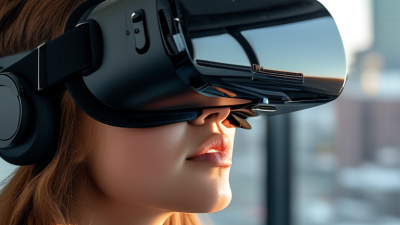
Main Categories of VR Devices Supplied in China

China’s VR suppliers generally offer three device categories: standalone headsets, PC-tethered systems, and enterprise-focused units. Standalone models combine displays, tracking cameras, and processors in one headset, making them practical for training rooms and location-based experiences. PC-tethered devices use a cable or wireless link to access stronger graphics processing. They suit design reviews and simulation, but require compatible computers and careful setup.

Enterprise units may add replaceable face interfaces, device-management tools, or precise tracking for repeated use. These details matter. A comfortable headset can still disappoint if users share it all day or staff cannot clean it efficiently. IDC’s Worldwide Quarterly Augmented and Virtual Reality Headset Tracker follows shipment trends across headset types, while its figures cover global markets rather than China alone. Suppliers and buyers should avoid treating worldwide shipment data as a direct measure of Chinese demand. The category lines blur.

For purchasing, compare resolution, refresh rate, field of view, tracking method, battery life, and after-sales support against the intended task. The China Academy of Information and Communications Technology’s industry research discusses VR applications and ecosystem development, offering useful context beyond hardware shipments. Yet reported market forecasts are not guaranteed sales. A small pilot can expose practical problems: glasses may press against the headset, controllers may be awkward, and Wi-Fi performance can vary by room. No category wins every use case.

Criteria for Comparing Chinese VR Device Suppliers

When comparing Chinese VR device suppliers, focus on verified performance rather than polished demonstrations. IDC’s Q3 2023 Worldwide Quarterly AR/VR Headset Tracker reported a 45.7% year-over-year decline in global headset shipments. In a shifting market, dependable support and consistent production matter as much as price. Ask for measured resolution per eye, refresh rate, field of view, lens distortion, and motion-to-photon latency. Request the test conditions, too. A specification without its measurement method is difficult to compare.

Test tracking in dim rooms and across quick head movements. Ask for SDK documentation, firmware update records, and a sample unit for extended comfort and heat checks. Small details matter: a nose gap can admit light, while a tight strap may become uncomfortable after an hour. For production readiness, review sample-to-batch consistency, inspection procedures, and replacement-part availability. Clarify response times and technical support arrangements before ordering. I would not treat one flawless demo as strong evidence; my own evaluation would still need repeated tests. Compare written results from multiple samples, and note where data is missing. That gap can be revealing. IDC’s tracker is a useful market signal, not proof that any individual supplier will deliver reliably.

Who Are the Best Virtual Reality Device Suppliers in China?

Criteria for Comparing Chinese VR Device Suppliers

The chart shows a suggested 100-point procurement framework, not supplier rankings or measured company performance. Adjust the weights to match your use case, and verify specifications, test results, production capacity, certifications, and service commitments directly with each supplier.

Leading VR Device Suppliers and Their Areas of Expertise

China’s virtual reality suppliers often specialize rather than build every component in-house. Some focus on optical modules, where lens clarity, edge distortion, and eye comfort matter during long sessions. Others concentrate on headsets, tracking cameras, or compact motion controllers. On a factory visit, details such as lens alignment checks and repeated cable-flex tests can reveal more than a polished product sample. Small details count.

Grand View Research estimated the global virtual reality market at USD 15.9 billion in 2023 and projected a 27.5% compound annual growth rate from 2024 to 2030. That growth creates demand for suppliers with reliable production, not just attractive prototypes. For enterprise training, buyers may need stable tracking and clear maintenance procedures. For education or location-based experiences, lightweight devices and fast setup can matter more. Expertise depends on the use case.

A capable supplier should explain its testing process, component sourcing, and software integration limits. Ask for measured battery life, display resolution, and tracking performance under realistic conditions. Request pilot units before committing to volume. The uncomfortable truth is that published specifications do not always match daily use. A headset may look excellent, yet feel heavy after thirty minutes. Independent testing is still worth the effort.

Who Are the Best Virtual Reality Device Suppliers in China? - Leading VR Device Suppliers and Their Areas of Expertise

Supplier profiles below describe common areas of expertise in China’s VR supply chain. They are categories, not named companies or a ranked list.

Supplier Type Area of Expertise Typical Products or Services Best-Fit Buyers What to Evaluate
VR headset OEM/ODM manufacturers Device assembly, product customization, and manufacturing for third-party brands Headsets, custom enclosures, packaging, and production services Brands seeking a manufacturing partner or a customized device Production capacity, quality-control process, customization scope, and sample approval
Standalone headset specialists Self-contained VR hardware that does not require a PC or console for basic operation Standalone headsets, controllers, and device-management options Training centers, schools, venues, and users prioritizing ease of setup Compatibility, tracking performance, battery life, comfort, and software support
Optics and display-component suppliers Optical and display components used in head-mounted devices Lenses, optical modules, display assemblies, and related components Headset manufacturers and product developers sourcing components Specifications, consistency between production batches, testing data, and integration support
Enterprise and training-system integrators Combining VR devices with training content, deployment, and operational support Headsets, multi-user setups, simulation software, and installation services Industrial, education, healthcare, and corporate training organizations Content relevance, user management, data-security requirements, maintenance, and support coverage
Location-based VR equipment suppliers Equipment and systems designed for supervised, shared-use entertainment venues VR attractions, tracking equipment, control systems, and venue-oriented packages Arcades, family entertainment centers, and event operators Throughput, cleaning procedures, safety controls, installation needs, and after-sales service
Accessories and peripheral suppliers Supporting hardware that improves fit, interaction, storage, or device upkeep Head straps, face interfaces, charging accessories, protective cases, and controller add-ons Device brands, distributors, venues, and headset owners Device compatibility, material quality, fit, durability, and packaging requirements

How to Select a Supplier for Your Requirements

How to Select a Supplier for Your Requirements

Choose a Chinese VR device supplier around your actual use case, not a polished catalog. For workplace training, inspect text clarity, tracking stability, comfort, and compatibility with your software. For public demonstrations, check cleaning procedures and how quickly staff can replace worn face cushions. Fit matters. IDC’s Worldwide Quarterly AR/VR Headset Tracker reported that global AR/VR headset shipments fell 20.9% in 2022, to 8.8 million units. That market volatility makes production planning and after-sales support worth checking—not just the quoted unit price.

Ask for sample devices from the intended production process, then test them during realistic sessions. Record battery life, heat near the face, connection drops, and setup time. Test the boring details. Request dated test reports, a clear component list, firmware support terms, and written defect-handling procedures. If a supplier cannot explain how it tracks changes between sample and mass-production units, pause before committing. A factory visit or independent quality audit can reveal useful gaps, though neither guarantees every shipment will be consistent. Be candid about your own requirements, too: an unclear brief can make even a capable supplier look unreliable.