China Best VR System for Global Buyers? The answer depends on more than price, resolution, or attractive product photos. A reliable Vr System should fit your venue, audience, budget, and local operating conditions. Buyers need to examine headset comfort, tracking stability, visual clarity, software compatibility, and maintenance access. Small details matter. A loose cable or uncomfortable facial cushion can affect a visitor’s experience within minutes.
Practical testing should guide the decision. Request a live demonstration, inspect the tracking area, and test several applications before signing an order. Ask how often the system needs calibration and whether replacement parts are available in your region. Experienced suppliers should provide clear specifications, user manuals, training, and responsive technical support. They should also explain software licensing, data handling, electrical requirements, and relevant market compliance. Claims should be supported by test records, customer references, or verifiable certifications.
No supplier fits every market. That is an uncomfortable truth. A premium system may be excessive for a small museum, while a low-cost model may struggle in a busy entertainment center. Delivery schedules, customs procedures, warranty terms, and language support can also change the total investment. Global buyers should compare the complete ownership cost, not only the factory quotation. This guide examines China’s VR solutions through performance, reliability, service, and value. It also recognizes practical weaknesses, because honest evaluation is more useful than polished promises.
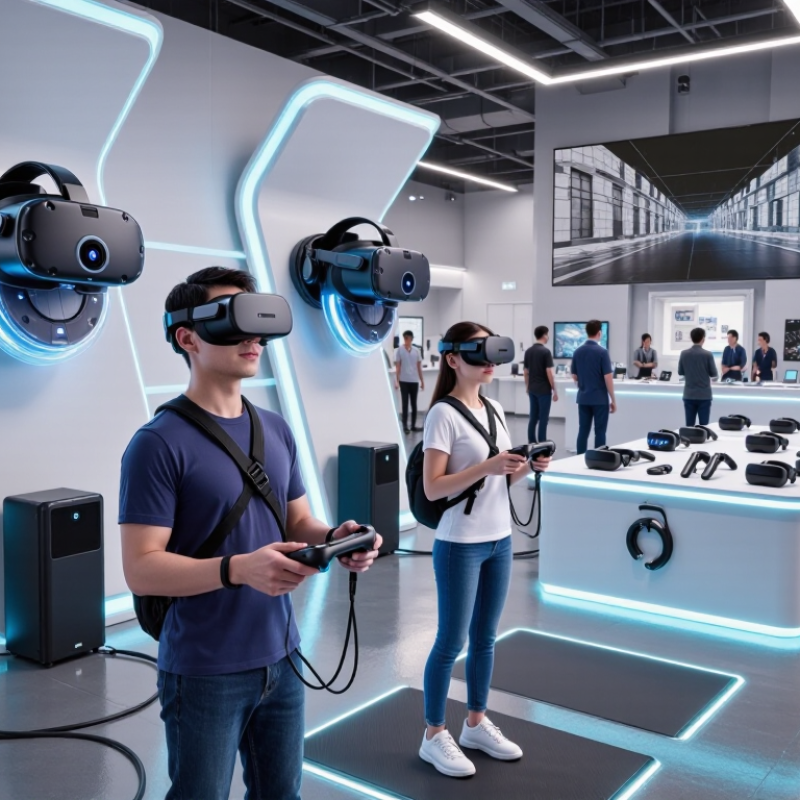
The best VR system for global buyers is not defined by resolution alone. It must fit real rooms, work across networks, and remain comfortable after long sessions. IDC reported that worldwide AR and VR headset shipments fell 23.5% in 2023, reaching about 8.1 million units. This decline shows that buyers now examine value more carefully.
Comfort matters immediately. A balanced headset, adjustable lenses, and clear instructions reduce fatigue during training or entertainment. Tracking should remain stable under bright windows, dim corners, and moving users. Independent testing is essential.
Grand View Research estimates that the global virtual reality market could grow at a 27.5% compound annual rate from 2023 to 2030.
Growth is promising, but poor hardware support can still create expensive problems.
A dependable system also needs multilingual software, regional warranty service, secure data handling, and replaceable accessories. Buyers should check update policies, controller durability, charging time, and compatibility with existing computers. Total ownership cost is often higher than the purchase price.
No system wins every room. Some specifications look impressive but feel weak in practice. A short pilot test with several users can reveal uncomfortable pressure points, motion discomfort, or confusing menus before a large order is placed.
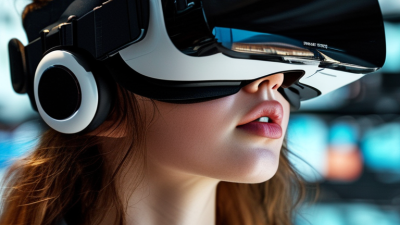
China’s leading VR systems are built around practical use, not spectacle alone. They commonly combine high-resolution displays, inside-out tracking, and adjustable head straps. In a warehouse trial, clear text on a virtual control panel matters more than bright scenery. Many systems now support wireless operation, spatial audio, and hand tracking. Setup can be completed quickly. That saves training time.
For global buyers, compatibility is a core feature. A dependable system should connect with common computers, development tools, and enterprise networks. Check Wi-Fi performance in crowded rooms, controller battery life, and language options before ordering. Some devices offer eye tracking or mixed-reality cameras for design reviews and remote instruction. These tools can reduce travel and improve visual learning. However, advertised field of view may feel different after several hours. Comfort is personal. A heavy front section can create pressure around the nose and cheeks.
Professional evaluation should include a supervised pilot, not only a specification sheet. Measure setup time, motion accuracy, image stability, heat, and support response. Ask for firmware policies, replacement procedures, and clear documentation. My own testing would not stop at a five-minute demonstration. Long sessions reveal small problems. A cable that loosens, or tracking that drifts near reflective glass, can disrupt work. China offers strong manufacturing depth, but quality still varies between models and batches. That caveat deserves attention.
A practical comparison of common VR system configurations available for international procurement
| System Category | Typical Display and Optics | Tracking and Interaction | Connectivity | Typical Use Cases | Key Buying Considerations |
|---|---|---|---|---|---|
| Standalone 6DoF VR | Dual displays with approximately 1832 × 1920 to 2160 × 2160 pixels per eye; refresh rates commonly between 72 and 120 Hz; field of view generally about 90°–110°. | Inside-out 6DoF tracking, two motion controllers, hand tracking on selected configurations, and room-scale play-area setup. | Wi-Fi 5 or Wi-Fi 6, Bluetooth, USB-C, and optional wireless PC streaming; OpenXR support is increasingly common. | Training, education, entertainment, virtual tours, simulation, and location-based demonstrations. | Check battery capacity, thermal performance, optical clarity, controller ergonomics, operating-system language support, and availability of replacement parts. |
| PC-Connected VR | High-resolution displays commonly ranging from 2160 × 2160 to 2448 × 2448 pixels per eye; refresh rates typically from 90 to 144 Hz. | External base-station tracking or inside-out tracking; precise controller tracking; optional eye tracking and facial tracking for advanced applications. | DisplayPort or USB-C wired connection; selected systems also support Wi-Fi 6 or Wi-Fi 6E streaming. | Engineering visualization, professional simulation, design review, research, and high-end gaming. | Confirm graphics-card requirements, cable length, tracking-area requirements, software compatibility, and the total cost of the headset plus computer hardware. |
| Enterprise Training VR | Resolution commonly above 1800 × 1900 pixels per eye, with 90–120 Hz refresh options and replaceable facial interfaces for shared use. | 6DoF tracking, configurable controllers, guardian boundaries, device-management support, and optional eye tracking for performance analysis. | Wi-Fi 6 or wired network deployment, USB-C charging, casting, and centralized content distribution. | Industrial training, healthcare education, workplace safety, equipment operation, emergency response, and technical instruction. | Evaluate fleet-management tools, user-account controls, hygiene procedures, warranty coverage, data security, and offline content support. |
| Industrial Simulation VR | High-resolution stereoscopic display, commonly 2K-class per eye or higher; refresh rates of 90 Hz or above are preferred for extended simulation sessions. | 6DoF tracking with hand controllers, tracked tools, steering devices, motion platforms, or external sensors depending on the simulator. | Wired Ethernet or USB-C for stable data transfer; optional Wi-Fi 6 for mobile deployment. | Manufacturing, aviation, logistics, construction, energy, vehicle testing, and digital-twin projects. | Prioritize low latency, mechanical durability, integration APIs, calibration repeatability, and compatibility with existing simulation software. |
| All-in-One Mixed Reality | VR displays with color passthrough cameras; common refresh rates range from 90 to 120 Hz; optical clarity depends on lens type, field of view, and passthrough processing. | Inside-out 6DoF tracking, spatial anchors, room mapping, hand tracking, and controller-based interaction. | Wi-Fi 6 or Wi-Fi 6E, Bluetooth, USB-C, wireless PC streaming, and support for spatial computing applications. | Collaborative design, retail demonstrations, remote assistance, education, architectural visualization, and interactive exhibitions. | Compare passthrough quality, spatial-mapping stability, camera performance, software ecosystem, privacy controls, and indoor-lighting requirements. |
| Location-Based VR System | Headsets generally use 2K-class or higher resolution per eye, with 90–120 Hz refresh options and wide-view optics for short-session immersion. | Multi-user tracking, synchronized content, wearable accessories, haptic devices, and optional motion platforms. | Dedicated local network, wired charging stations, wireless synchronization, and operator-control interfaces. | Theme parks, museums, shopping centers, exhibitions, tourism, entertainment venues, and branded experience centers. | Assess simultaneous-user capacity, cleaning workflow, session turnaround time, operator monitoring, content licensing, and venue safety requirements. |
Note: Specifications are representative market ranges rather than a single manufacturer’s product sheet. Actual performance varies according to display panels, lenses, processors, software, network conditions, and regional configuration.
Global buyers should compare complete VR systems, not catalog prices. IDC’s Worldwide Quarterly AR/VR Headset Tracker forecast 44.2% shipment growth in 2024. That forecast signals demand, but it does not prove product quality.
Hardware comes first. Check optical clarity, field of view, refresh rate, tracking stability, controller latency, and heat after thirty minutes. Request measured results, not only claimed specifications. Test twice. Grand View Research valued the VR market at USD 59.96 billion in 2022 and projected a 27.5% CAGR through 2030. This growth increases pressure to support future deployments. For a Chinese system, ask for reproducible demonstrations using your workflow. Record frame rate, dropped frames, startup time, and recovery after tracking loss. One polished showroom scene can hide weak performance.
Software deserves equal scrutiny. Confirm OpenXR support, engine compatibility, language options, device management, update policy, and offline operation. Compare identical scenes, lighting conditions, network limits, and workloads. Also inspect documentation, warranty handling, spare parts, and technician response times. Independent testing improves reliability, yet my own trials still need repetition. Human fit varies. Leave room for doubt.
Comparison of representative VR system categories using a 0–100 evaluation index. The index combines commonly used buyer criteria: display clarity, refresh rate, tracking capability, software compatibility, and battery practicality. Values represent typical market performance ranges rather than any specific company or brand.
Premium PC-connected systems generally provide the highest display and tracking performance, while standalone systems offer greater mobility and simpler deployment. For global buyers, software compatibility, content availability, language support, warranty coverage, and regional after-sales service should be evaluated alongside hardware specifications.
Choosing a VR system from China requires more than comparing resolution, tracking, and price. International buyers should examine electrical safety, heat control, eye comfort, and mechanical durability. During practical product checks, I look for secure cable connections, smooth head straps, and ventilation around the processor. Small faults become serious after hours of daily use. Safety comes first.
Compatibility also deserves careful testing. A headset should work with the buyer’s computers, operating systems, controllers, and network environment. Check language settings, power adapters, wireless frequencies, and software update procedures before placing a large order. A system may perform well in a showroom but fail in a school, arcade, or training center. Real environments are less forgiving.
Certification requirements vary by destination. Buyers may need evidence related to CE, FCC, UKCA, RoHS, or other regional rules. Certificates should match the exact model, factory, and electrical configuration. Ask for test reports, declarations, user manuals, and traceable serial numbers. Independent laboratory verification adds credibility, especially when documents look incomplete. No system is perfect. Even experienced teams can miss regional differences in radio approval or data handling. I would also review warranty response times, spare-part availability, and software support in writing. A lower purchase price means little when replacement parts cross borders slowly.
For global buyers, a VR system is not only a headset and a shipping carton. Purchasing decisions should include software compatibility, regional certifications, spare parts, training, and response times.
Grand View Research estimates that the global virtual reality market reached about US$59.96 billion in 2023, with a projected 27.5% CAGR from 2024 to 2030.
The figures vary by report scope, so buyers should question impressive forecasts.
Ask for a complete cost sheet. Include freight, customs handling, installation, replacement controllers, and annual software fees. A practical supplier should provide remote diagnostics, clear firmware procedures, and multilingual manuals.
Support matters most when a training room has twenty devices and one unit stops tracking. Fast answers help. A two-year warranty is useful, but local repair options may matter more than a longer promise.
Long-term value also depends on upgrade planning. Check whether the system supports open development tools, common file formats, and future accessories.
PwC’s Seeing Is Believing report projected that immersive technologies could contribute US$1.5 trillion to the global economy by 2030, but adoption still depends on measurable results.
Buyers should test comfort after a forty-minute session, not only during a short demonstration.
Some purchasing assumptions fail in real classrooms. A lower initial price can create higher support costs later.
Good records, pilot testing, and honest supplier references remain essential.