Training Manikins give learners a place to practise clinical skills before working with patients. They can simulate chest movement, airway positioning, pulse checks, or changing vital signs. That physical repetition helps learners connect instructions with hand movements and team communication. Practice matters.
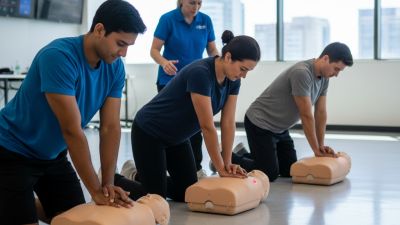
The American Heart Association’s 2024 Heart Disease and Stroke Statistics update reports that about 40% of U.S. out-of-hospital cardiac-arrest victims received bystander CPR. That figure describes a real-world gap, not proof that manikin training alone closes it. Still, repeated CPR practice can help learners rehearse compressions, follow feedback, and respond under time pressure. A manikin also lets instructors pause a scenario, correct hand placement, and run it again. The awkward second attempt can teach more than a polished first one.
David Gaba, a physician and simulation-science expert, described simulation as “a technique, not a technology” (Gaba, Simulation in Healthcare, 2004). His point helps explain why Training Manikins are useful: the equipment supports a designed learning experience, but does not create one by itself. Instructors must set clear objectives, observe performance, and give specific feedback. Some advanced models provide measurable feedback; simpler models can still support basic practice. Neither can reproduce the uncertainty, emotion, or complexity of caring for a real person. That limit deserves attention. Used thoughtfully, however, manikins offer a repeatable setting where learners can make mistakes, reflect, and improve before those skills matter in clinical care.
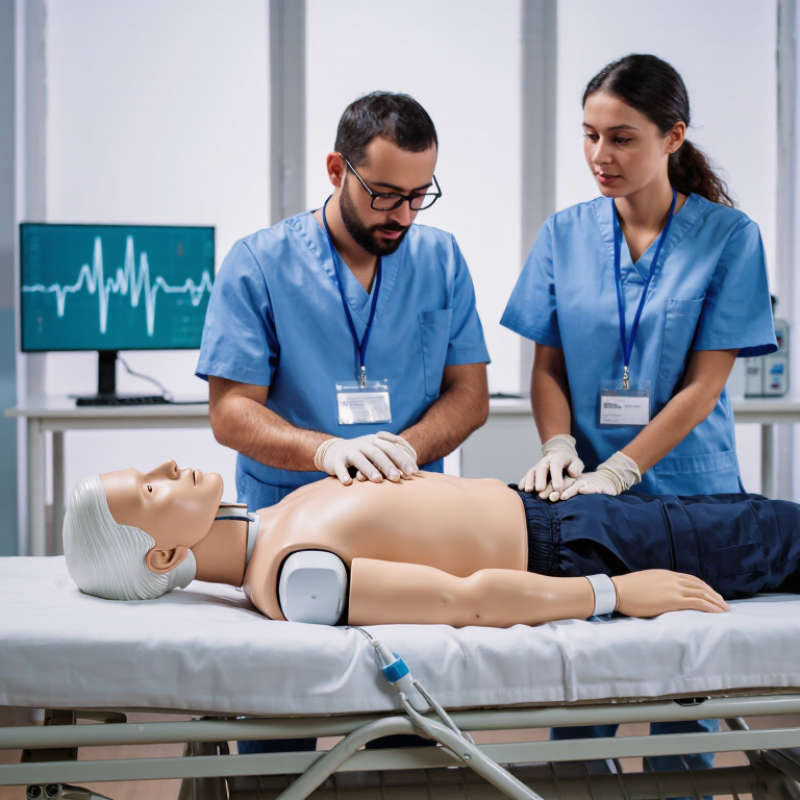
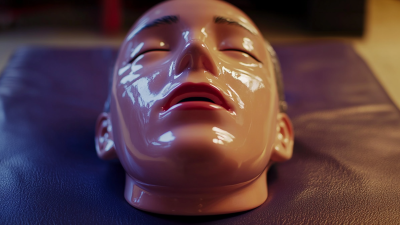
Training manikins are physical models used to practise clinical skills in a controlled setting. They may represent a whole body, a torso, or a single body part. Some are simple. Others include movable joints, replaceable airways, or electronic sensors. The design depends on the skill being taught, from bandaging a limb to practising chest compressions.
Learners interact with the model as they would during a real procedure. A manikin’s chest may rise when air enters its lungs, while sensors in some models measure compression depth and rate. Instructors can use these responses to guide practice and correct technique. Not every model gives digital feedback; some rely on observation and discussion. The instructor’s judgment still matters.
Manikins let learners repeat a task without putting a patient at risk. They can also help teams practise communication, such as calling out observations while preparing equipment. But a plastic chest cannot fully reproduce human skin, movement, or the pressure of a real emergency. Even realistic models have limits. Cleaning instructions, replaceable parts, and suitable scenario design affect how useful practice will be. A little awkwardness in practice can reveal what needs more attention.

Training manikins provide a consistent way to practise hands-on skills before working with a person. Learners can rehearse hand placement, positioning, and equipment handling in a controlled setting. They can repeat the same steps and notice where their technique changes. That repeatability helps instructors give specific feedback, such as adjusting hand pressure or correcting an angle.
Practice should feel focused, not rushed. A learner can pause, reset the manikin, and try again without causing discomfort.
Tips: Check the manikin’s condition before each session. Follow the instructor’s guidance, and practise one skill at a time. Ask for feedback when a movement feels awkward.
Manikins also make it easier to practise as a team. One learner can perform a skill while another observes the sequence and shares notes. Still, a manikin cannot fully reproduce a person’s movement, communication, or response. That gap matters.
Use practice to build familiarity, then reflect on what may need to change in a real interaction. Mistakes are useful, though not every session makes progress obvious.
Training manikins make practice feel more concrete. A learner can place their hands, check a response, and notice how small choices affect the next step. In a realistic scenario, a trainer might describe a person collapsing beside a crowded doorway. Learners must assess the scene, communicate clearly, and decide what to do while distractions compete for attention. The manikin gives them a safe way to rehearse physical skills without putting another person at risk.
Tips: Keep scenarios focused on one or two learning goals. Add realistic details, such as background noise or limited space, but avoid overwhelming beginners. After practice, ask what felt uncertain and what information would have helped.
Confidence grows through repetition, not a perfect first attempt. Pausing to think is useful; guessing just to appear confident is not. Instructors can observe technique, give specific feedback, and let learners try again. Manikins cannot reproduce every human response, and a tidy simulation may feel easier than a real emergency. That gap deserves discussion. Learners should practice following current training guidance, speaking up when unsure, and adapting calmly when the scenario changes.
During a skills session, an instructor watches more than whether a trainee completes the steps. A manikin makes actions visible and repeatable. It can show hand placement, compression depth, pace, and interruptions in a way a verbal description cannot. Small details matter. An instructor may notice leaning shoulders, drifting hands, or pauses as the trainee searches for the next action.
Many training manikins provide measurable feedback, such as compression rate, depth, and recoil. These figures help instructors compare attempts against course criteria, rather than relying on memory alone. Yet numbers need context. A trainee might reach the target rate but repeatedly lift their hands. The instructor can pause the drill and coach that specific habit. Assessment also considers sequence, confidence, and response to feedback. One clean run does not prove consistent skill.
After coaching, instructors often repeat the same scenario and compare what changed. Was the rhythm steadier? Were pauses shorter? Did the trainee correct errors without prompting? Notes on these observations make feedback concrete and guide the next practice round. Manikins cannot reproduce every human response, and sensor readings may miss technique problems. That limitation deserves attention. Instructors can also become too focused on the display. During the next round, they should watch the trainee’s hands as closely as the numbers.
| Skill or Performance Area | What the Learner Does | What the Instructor Assesses | How the Manikin Supports Assessment | Typical Feedback or Evidence |
|---|---|---|---|---|
| Chest compressions | Positions their hands and delivers compressions during a resuscitation exercise. | Hand placement, compression rate and depth, full chest recoil, and interruptions. | Depending on the model, sensors or a connected feedback system can record compression performance. The instructor can also observe technique directly. | Measured feedback may show rate, depth, recoil, and pauses; visual observation can identify posture or hand-position issues. |
| Rescue breaths and ventilation | Opens the airway and gives breaths with a mask or other training equipment. | Airway positioning, mask seal, breath delivery, and whether ventilation causes visible chest rise. | The manikin provides a consistent practice subject; models with ventilation sensors may also register delivered breaths or volume. | The instructor can note effective chest rise, excessive or insufficient ventilation, and the learner’s coordination of breaths with compressions. |
| Automated external defibrillator (AED) use | Turns on the trainer, applies pads, follows prompts, and performs the simulated shock sequence safely. | Correct sequence, pad placement, attention to prompts, and ensuring people are clear before a simulated shock. | A manikin can be used with an AED trainer to provide a repeatable scenario without delivering a real shock. | The instructor observes whether steps are completed in order and whether the learner communicates and follows safety prompts. |
| Airway positioning and basic airway skills | Uses appropriate positioning or training equipment to maintain or manage an airway in the exercise. | Technique, sequence, gentle handling, and response to the scenario’s stated conditions. | Airway-capable manikins allow learners to practise physical steps in a controlled setting. Features vary by model. | Direct observation shows whether the learner uses the taught technique and recognizes when reassessment is needed. |
| Bleeding-control and trauma procedures | Applies simulated pressure, dressings, or a training tourniquet as appropriate to the exercise. | Action selection, placement, application technique, and reassessment of the simulated injury. | Task trainers or manikins with simulated injuries provide a consistent surface for practising procedures without treating a real patient. | The instructor checks technique and decision-making against the course checklist; the realism and available features depend on the trainer. |
| Clinical decisions and reassessment | Responds to scenario cues, performs relevant checks, and adjusts actions as the situation changes. | Recognition of priorities, appropriate actions, reassessment, and completion of key steps. | An instructor can control scenario cues and repeat the same case for different learners, supporting consistent observation. | Performance is commonly documented with a checklist, rubric, or debrief notes rather than relying on the manikin alone. |
| Communication and teamwork | Shares information, assigns tasks, and coordinates actions with other learners. | Clear communication, role awareness, closed-loop communication where taught, and coordination. | The manikin provides a shared scenario focus while the instructor observes how the team works together. | Feedback is based mainly on observed behavior and scenario outcomes; a manikin does not independently measure teamwork. |
Training manikins are used in different settings because each model supports a different kind of practice. Basic CPR torsos suit classrooms, workplaces, and community courses, where learners can rehearse hand position and compression rhythm. The American Heart Association’s 2020 CPR guidance recommends adult chest compressions at 100–120 per minute, a target that instructors can check during practice. Repetition helps. Still, a torso cannot recreate the stress of helping a real person.
In clinical skills labs, task trainers focus on one procedure, such as airway placement, injections, or wound care. Their compact design lets learners repeat a specific movement without occupying a full simulation room. Hospitals and medical schools may use high-fidelity, full-body manikins for team scenarios. Staff can practise handovers, emergencies, and communication while instructors adjust the scenario. The detail is useful, though it can make a simulation feel more realistic than it truly is.
Specialist models support focused training, too. Birthing manikins are used in obstetric education; newborn and pediatric models help teams practise age-specific assessment and resuscitation. The 2014 NCSBN National Simulation Study found comparable measured outcomes when qualified nursing programs replaced up to 50% of clinical hours with simulation. That finding depended on suitable resources and trained faculty. A manikin can build confidence, but it cannot fully reproduce a patient’s changing needs. That gap deserves attention.