Leave Your Message
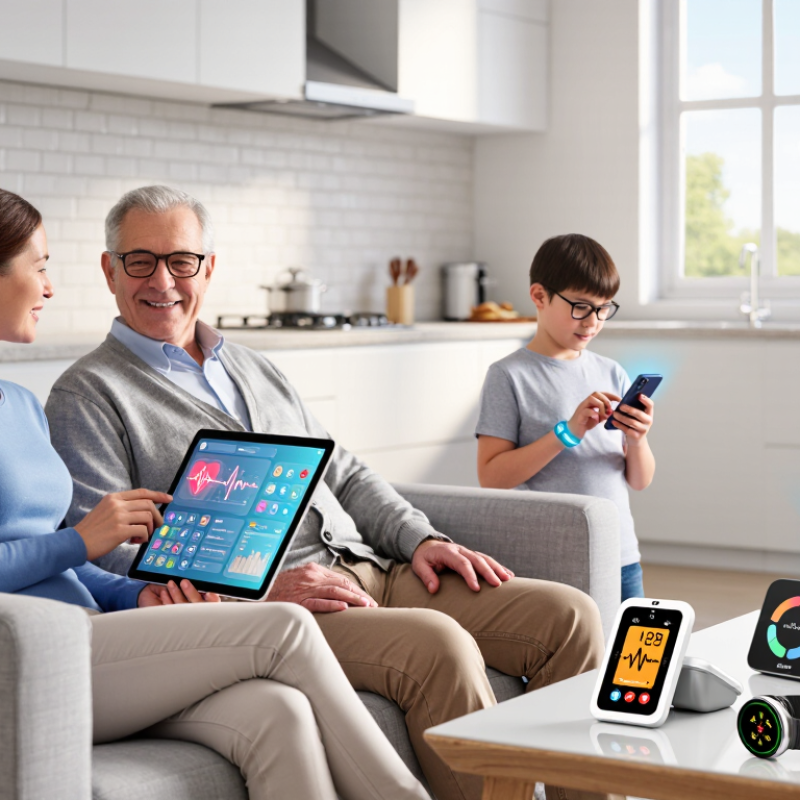
Health Care Tech is moving from hospital corridors into homes, phones, pharmacies, and everyday routines. Artificial intelligence now supports image analysis, clinical documentation, risk prediction, and treatment planning. Remote monitoring devices can capture heart rhythm, glucose levels, sleep patterns, and blood pressure between appointments. These tools may help clinicians notice warning signs earlier, especially for patients managing chronic conditions.
Eric Topol, a physician, researcher, and digital medicine authority, wrote, “The future of medicine is the consumerization of healthcare.” His view highlights a major shift: patients are becoming active participants in their care, not passive recipients. Yet convenience alone does not prove clinical value. A smartwatch may display an irregular pulse, but a qualified professional must interpret that signal carefully. Data can inform care. It cannot replace judgment.
Interoperable health records are another important trend. They can reduce repeated tests and give clinicians a clearer picture of a patient’s history. However, fragmented systems, cybersecurity risks, algorithmic bias, and unequal internet access remain serious barriers. The technology is advancing faster than many institutions can responsibly adopt it. That gap deserves honest attention.
Not every innovation will improve outcomes. Some tools create alerts, costs, or confusion without helping patients. The strongest Health Care Tech solutions will combine validated evidence, transparent design, clinical experience, and patient trust. They should work in busy clinics, rural homes, and crowded emergency departments. The future looks promising, but it is not automatic. Care must remain human.
What are health care technology trends? The answer reaches beyond artificial intelligence. The field includes digital records, telehealth, remote monitoring, clinical decision support, cybersecurity, and health data governance. It also covers how patients and professionals use these tools during real care. The WHO Global Observatory for eHealth reported in 2016 that 58% of countries had a national eHealth strategy. That figure shows progress, but it also reveals uneven preparation. A modern platform may fail when clinics lack stable internet, trained staff, or compatible systems.
Scope matters. Health care technology connects devices, software, people, and policies across hospitals, homes, laboratories, and public health agencies. Remote sensors can record a patient’s heart rhythm at home. Algorithms can flag unusual patterns for professional review. However, a flag is not a diagnosis. Human judgment remains essential, especially when data is incomplete or biased. The OECD’s Health at a Glance 2023 reported average health spending of 9.2% of GDP across OECD countries in 2022. That pressure encourages digital investment, yet cheaper technology is not always better care. Sometimes, a simple phone call works better.
Reliable evaluation should measure safety, access, clinical outcomes, privacy, and staff workload. These measures reflect E-E-A-T principles through practical experience, expert oversight, transparent evidence, and accountable governance. The boundaries remain messy. A trend becomes meaningful only when it improves real decisions without creating new burdens for patients or care teams.
Health care technology trends are sustained changes in the tools, systems, workflows, and data practices used to prevent disease, diagnose conditions, deliver treatment, manage operations, and improve patient outcomes.
| Trend area | Definition and scope | Verified indicator | Reference period | Why it matters | Key limitation |
|---|---|---|---|---|---|
| Telehealth and virtual care | Remote clinical consultations, follow-up visits, behavioral health services, and selected forms of virtual triage delivered through secure communication technology. | 30.1% of adults in the United States used telemedicine during the previous 12 months. | 2022 | Expands access for people facing distance, mobility, scheduling, or transportation barriers. | Use varies by age, income, broadband access, language, clinical need, and local reimbursement rules. |
| Electronic health records and interoperability | Digital recording, retrieval, exchange, and coordinated use of patient information across clinical settings and care transitions. | 96% of non-federal acute care hospitals had adopted a certified electronic health record system. | 2021 | Supports continuity of care, clinical documentation, analytics, and safer information exchange. | Adoption does not guarantee that systems exchange complete, timely, or easily usable information. |
| Artificial intelligence and machine learning | Algorithms that identify patterns in clinical, imaging, administrative, or population-health data to support prediction, classification, documentation, and decision-making. | The World Health Organization identifies AI as a major opportunity for diagnosis, treatment, research, public-health surveillance, and health-system management, while calling for governance and human oversight. | 2021 guidance, still applicable to current implementation | May improve efficiency and support earlier detection when models are clinically validated and appropriately monitored. | Performance can change across populations and settings; bias, privacy, explainability, and accountability remain material risks. |
| Remote patient monitoring | Collection and clinical review of patient-generated data, such as blood pressure, glucose, weight, oxygen saturation, or heart rhythm, outside traditional facilities. | The approach is included in U.S. Medicare physician-service payment rules through remote physiologic monitoring and remote therapeutic monitoring code families. | 2024 payment year | Can support chronic-condition management and identify deterioration between scheduled visits. | Clinical value depends on measurement quality, patient adherence, alert management, staffing, and reimbursement conditions. |
| Wearable and sensor-based health data | Consumer or clinical sensors that capture activity, sleep, heart rate, temperature, movement, or other physiological signals. | 21% of U.S. adults reported regularly wearing a smartwatch or fitness tracker. | 2020 | Creates opportunities for prevention, longitudinal monitoring, research, and more personalized health programs. | Consumer measurements may not be equivalent to clinically validated measurements, and data ownership practices differ. |
| Digital therapeutics and mobile health | Software-enabled interventions used to prevent, manage, or treat health conditions, including structured mobile programs and behavior-support tools. | The World Health Organization’s digital health classification includes mobile applications, digital interventions, decision-support tools, and client-facing communication services. | 2023 classification framework | May extend evidence-based support beyond clinic visits and improve self-management. | Effectiveness depends on evidence quality, sustained engagement, accessibility, clinical integration, and regulatory status. |
| Health data security and privacy | Technical, organizational, and legal controls that protect health information from unauthorized access, alteration, loss, or disclosure. | The U.S. Department of Health and Human Services reported 725 large breaches of unsecured protected health information in 2023. | 2023 | Trust, continuity of care, patient safety, and responsible data sharing depend on resilient security practices. | Reported breach totals do not measure every security incident or the full scale of affected systems and records. |
| Precision and genomics-enabled care | Use of genomic, molecular, clinical, and environmental information to improve risk assessment, diagnosis, treatment selection, and prevention. | The National Human Genome Research Institute describes genomic medicine as using a person’s genomic information as part of clinical care and decision-making. | Ongoing field definition | Can help identify inherited risk and support more targeted treatment strategies. | Access, interpretation, consent, data governance, insurance policy, and representation in reference datasets affect real-world benefit. |