How to Choose Clinical Equipment for Global Procurement?
Choosing Clinical Equipment for global procurement is not a simple price comparison. Hospitals need dependable devices, clear evidence, and support after delivery. A monitor may meet technical specifications, yet fail when local technicians cannot repair it. A sterilizer may perform well in a laboratory, but struggle with unstable power or poor water quality. These practical details often decide whether a purchase improves care.
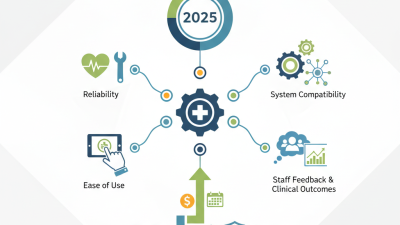
A reliable selection process begins with the clinical task, patient population, and operating environment. Procurement teams should review intended use, safety documentation, quality certifications, user training, cybersecurity controls, and maintenance requirements. They should also verify supplier experience, distribution capacity, spare-parts availability, and response times in the destination market. Independent testing, reference-site feedback, and transparent warranty terms can increase confidence. No certificate replaces careful evaluation.
Cost still matters, but the invoice is only one part of ownership. Shipping, installation, calibration, consumables, software updates, energy use, and disposal can change the financial picture. Buyers should compare total lifecycle value across realistic scenarios, not optimistic promises. Good decisions also respect local regulatory requirements and recognized international standards. Even experienced teams can overlook language barriers or workflow differences. That weakness deserves attention. This guide presents an evidence-informed approach to choosing Clinical Equipment across borders, while recognizing that procurement requires judgment, documentation, and ongoing review.
Define Clinical Needs Across WHO’s 2 Million Medical Device Types
Global procurement begins with a clinical question, not a catalogue search. The World Health Organization’s Global Atlas of Medical Devices reports more than 2 million device types across over 7,000 generic groups. That scale can overwhelm a purchasing team. Define the task first: neonatal oxygen delivery, trauma imaging, sterilization, or routine monitoring. Then specify patient volume, operator skills, electricity quality, water access, and maintenance capacity. A pulse oximeter for a city hospital may fail in a rural clinic without reliable charging.
Use evidence-based specifications rather than familiar product descriptions. WHO’s Priority Medical Devices List encourages needs assessment, availability analysis, and lifecycle planning. Compare accuracy, consumables, cleaning procedures, training time, warranty support, and expected service intervals. The cheapest quotation is rarely the lowest clinical cost. OECD Health at a Glance 2023 reports average health spending of 9.2% of GDP across OECD countries in 2022, yet many systems still face resource constraints. Procurement decisions must protect budgets and patient safety together.
A practical tender can require local performance testing, user acceptance checks, and documented calibration procedures. Ask whether staff can operate the device after a short training session. Test it under realistic conditions. This matters more than polished specifications. Our process is not perfect. Needs can change after deployment, and early demand estimates may be wrong. Build review points into contracts, record failure patterns, and update technical requirements with clinicians, biomedical engineers, and infection-control teams. WHO’s 2023 Global report on infection prevention and control reinforces the importance of usable equipment, cleaning systems, and trained personnel.
Verify Suppliers Against ISO 13485:2016 Quality-Management Requirements
How to Choose Clinical Equipment for Global Procurement?
Supplier verification should begin with ISO 13485:2016, not a sales presentation.
The standard requires controlled purchasing, documented supplier evaluation, performance monitoring, and risk-based re-evaluation. Ask for the current certificate, scope, issuing body, audit status, and manufacturing-site address. Confirm that the certificate covers the exact device and critical processes.
A certificate is evidence, not proof.
ISO’s 2023 Survey recorded more than 30,000 ISO 13485 certificates worldwide, showing broad adoption of medical-device quality systems.
However, certification levels differ. Review nonconformity trends, corrective-action closure, complaint handling, and change-control records. FDA’s 2023 Medical Device Reporting data exceeded one million submissions, highlighting the importance of traceability and post-market vigilance. Request lot records, test methods, calibration evidence, and recall procedures before approval.
See the factory, when practical.
Interview quality staff, not only commercial contacts. Trace one sample from incoming materials to final release. Check whether operators follow the approved work instruction. Small gaps matter. I have seen polished procedures fail during a simple batch-record review. That is a useful warning, but not a universal rule. Independent inspection, sample testing, and periodic supplier scorecards add stronger evidence. Procurement teams should document every decision, including unresolved weaknesses and the conditions required for correction.
Validate Local Readiness Where WHO Reports Up to 80% Equipment Downtime
Global procurement should begin with local readiness, not product specifications. WHO reports have cited equipment downtime rates reaching 80% in some low-resource settings. A technically advanced device can remain unused when power quality, maintenance, or staff training is inadequate.
Before purchasing, assess the facility’s daily conditions. Check voltage stability, backup power, room temperature, water supply, and infection-control procedures. Confirm that trained operators are available for every shift. Ask whether technicians can perform preventive maintenance locally. Spare parts, calibration tools, service manuals, and consumables must have realistic delivery routes. A six-month delay can turn a useful device into stored equipment.
Use site visits, structured interviews, and maintenance records to verify readiness. Do not rely only on supplier questionnaires. Compare reported uptime with repair logs and patient-service records. Talk with nurses, biomedical technicians, and procurement officers separately. Their answers may disagree.
That disagreement matters.
In practice, teams often approve equipment before testing the installation site. We once treated a stable power supply as a simple checkbox. It was not. Seasonal outages changed the decision. The assessment also missed limited storage space, which damaged sensitive supplies. These gaps are uncomfortable, but they reveal the real procurement risk. Select equipment that local staff can operate, maintain, and restore under ordinary working conditions, not ideal conditions.
Clinical Equipment Readiness for Global Procurement
WHO reports that up to 80% of medical equipment in some low-resource settings may be non-functional at a given time. This chart highlights the operational-readiness gap that procurement teams should validate locally before purchase.
Data basis: WHO-reported upper-bound estimate of medical equipment downtime in some low-resource settings: up to 80%. The 20% operational figure represents the complementary share in this scenario and should not be interpreted as a global average.