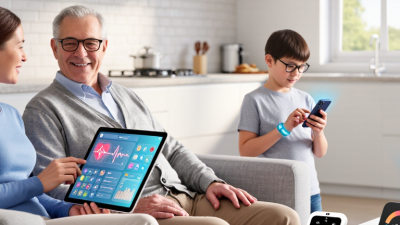
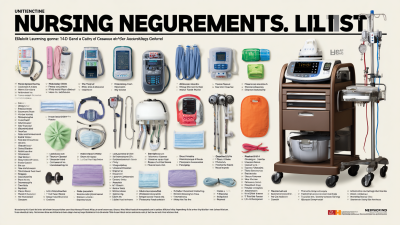
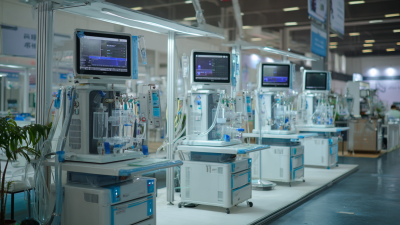
Health Care Tech is no longer a distant promise; it is visible in clinic rooms and patients’ homes. A nurse checks a tablet beside a bedside monitor. A patient uploads blood pressure readings from a small connected cuff. For global buyers, the challenge is choosing tools that work reliably beyond a product demonstration.
The World Health Organization’s 2021 Global Strategy on Digital Health calls digital technology essential to advancing universal health coverage. WHO Director-General Dr. Tedros Adhanom Ghebreyesus put it plainly: “Harnessing the power of digital technologies is essential for achieving universal health coverage.” McKinsey’s 2024 analysis estimated that generative AI could create $60 billion to $110 billion in annual value for the pharmaceutical and medical-product industries. That is an estimate, not a guaranteed return for any buyer.
This Top 10 overview considers connected monitoring, telehealth platforms, diagnostic tools, clinical software, and other practical categories. It weighs evidence, interoperability, usability, service support, and total cost—not just impressive specifications. A device that works in one hospital may struggle with another network, language, or workflow. No shortlist can settle every local need. That is worth admitting. Buyers should verify claims against independent evidence and their own clinical requirements before purchasing.
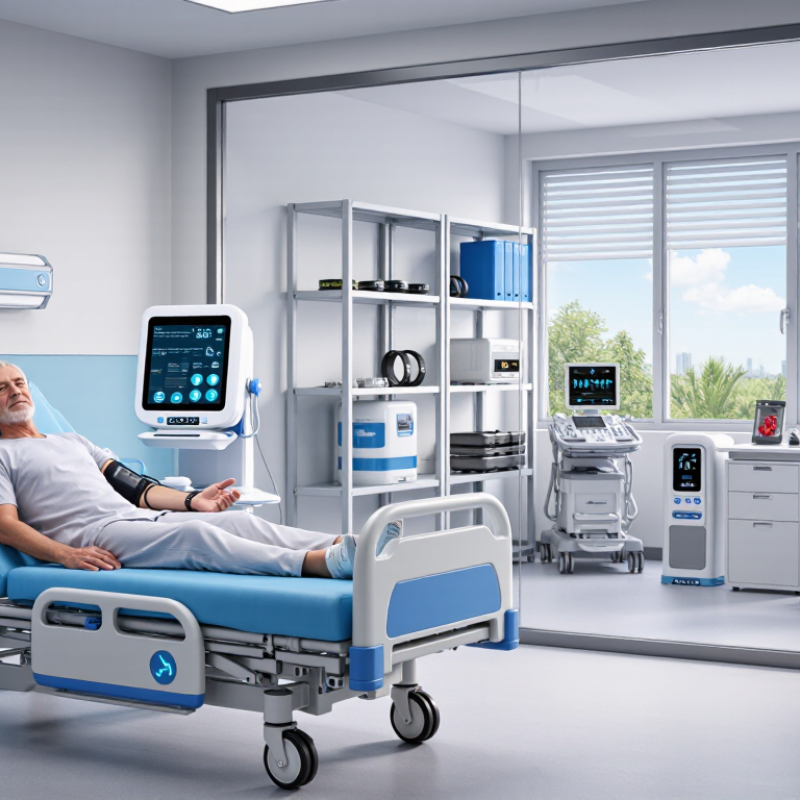
Healthcare technology products cover more than devices used in hospitals. They include diagnostic tools, patient monitors, imaging systems, telehealth platforms, laboratory equipment, and software for clinical records. Some support care directly; others help staff coordinate appointments, track supplies, or review test results. Care settings shape the need. A rural clinic may need portable ultrasound and reliable offline functions. A large hospital may prioritize links among departments. Useful products must fit workflows, staff skills, power access, connectivity, cleaning routines, and local maintenance capacity. That detail matters. Even a precise monitor may be less useful if staff cannot calibrate it or obtain replacement parts.
Global buyers can compare intended use, clinical evidence, data protection, interoperability, training needs, and total ownership costs. These checks are not paperwork alone. A thermometer, for example, needs clear instructions, consistent readings, and a practical cleaning process between patients. Digital tools also need safeguards for access and secure handling of patient information. Not every feature improves care. A dashboard may look impressive yet add work if its alerts are poorly tuned. Specifications rarely reveal that friction. Pilot testing with clinicians and patients can expose gaps before wider adoption, though small trials may not predict every setting. Local feedback can change the choice.

Typical care settings served by each product category
Scope is counted across five settings: hospitals, outpatient clinics, homes, emergency services, and community care. Counts describe typical use cases, not market size, adoption, or product performance; actual availability and intended use vary by product and country.
Comparing health care technology across markets starts with the clinical task, not the feature list. Check whether evidence reflects the intended patients, care setting, and language. Then test integration with local records and workflows. Can staff export data in usable formats? A polished dashboard is not enough.
Connectivity changes the decision. The International Telecommunication Union’s Facts and Figures 2023 estimated that 5.4 billion people were online, while 2.6 billion remained offline. Test the product on weak networks and during outages. Test it offline. WHO’s Global Strategy on Digital Health 2020–2025 also stresses equitable, evidence-based, interoperable systems.
Compare privacy safeguards, update support, training, repair access, and total cost—not just purchase price. A low-cost device may demand costly local support. No scorecard is neutral: weighting price too heavily can hide those burdens, and a neat comparison may still miss what clinicians need.
Healthcare technology products address different workflow needs; buyers should match each tool to a defined care setting. Telehealth platforms support video consultations, follow-up care, and specialist access for patients far from clinics. Clear audio matters. Electronic health record systems organize histories, referrals, and test results, while decision-support software can flag patterns for clinician review. It should not replace diagnosis. Remote monitoring devices track blood pressure, oxygen levels, or glucose at home. Alerts help care teams prioritize outreach, but thresholds require clinical oversight.
Diagnostic imaging systems produce detailed images that clinicians use to assess injuries or monitor disease. Wearable sensors can record movement, heart rate, or sleep patterns during daily routines. Medication-management tools help organize doses and send reminders, which may support patients managing several prescriptions. These products work best when staff can explain their limits and patients can use them comfortably. A complicated screen may undermine an otherwise useful feature.
Global buyers should check whether a product connects with existing records, works reliably on local networks, and has clear maintenance support. Language options, training needs, data safeguards, and replacement parts also affect day-to-day use. A low purchase price is not always a low operating cost. A polished dashboard can still produce confusing alerts, so teams should test devices with realistic workflows before wider adoption. Local clinical review is essential. Some needs will only become clear after use.
Global buyers should treat regulatory fit as a market-by-market question. Device classification, evidence requirements, privacy rules, labeling, and post-market duties can differ. Request current certificates, intended-use statements, local-language instructions, and a named regulatory contact. A certificate alone is not enough.
Integration deserves equal scrutiny. Test products with real workflows, existing records, and weak-network conditions. WHO’s 2021 Global Strategy on Digital Health reports that 120 Member States had national digital health strategies. Yet policy progress does not mean systems share technical standards. That gap matters. ITU’s Facts and Figures 2023 estimated that 2.6 billion people remained offline, reinforcing the need to assess connectivity and offline functions. Confirm who manages interface changes, security updates, and staff training after installation. Vague support promises age badly.
Tips: Before signing, assign a local regulatory owner, run an integration test, and document service response times. Check spare-part access, language-specific training, and data export options.
One uncomfortable truth: even a careful review can miss workflow friction until busy staff use the product.
Global buyers should match healthcare technology to the place where care happens, not just compare feature lists. A rural clinic may need a portable diagnostic device, offline records, and reliable battery backup more than a cloud dashboard. An urban hospital may prioritize interoperable records and connected patient monitoring. Different settings, different priorities.
The WHO and World Bank’s 2023 Universal Health Coverage report estimates that 4.5 billion people lacked full coverage of essential health services in 2021. That access gap makes connectivity, staff training, maintenance, language, and local workflows essential parts of procurement. Easy to miss. Telehealth can support remote follow-up, while portable diagnostics may suit mobile care teams. Remote monitoring is useful only when clinicians can respond to alerts. WHO’s Global Strategy on Digital Health 2020–2025 reported that 120 Member States had developed national digital health strategies. Yet strategy does not guarantee local readiness. Buyers should test devices with local staff, check consumable availability, and confirm support timelines before scaling. Even good tools can stall. One question deserves an honest answer: will a product reduce workload, or simply move paperwork onto nurses’ screens?
| Technology product | Best-fit care setting | Local need it can address | Key features to consider | Local deployment checks |
|---|---|---|---|---|
| Digital blood pressure monitor | Primary-care clinics, pharmacies, community screening and home use | Routine hypertension screening and follow-up where trained staff or clinic visits are limited | Validated measurement model; correctly sized cuffs; clear display; memory; battery operation; optional data export | Check independent validation, cuff availability across arm sizes, calibration and maintenance arrangements, and suitability for the intended patient population. |
| Pulse oximeter | Clinics, emergency triage, inpatient wards and selected home-monitoring programs | Non-invasive spot checks or trending of peripheral oxygen saturation and pulse rate | Readable display; replaceable batteries or rechargeable power; adult and, where needed, pediatric sensors; low-perfusion performance information | Assess performance under local conditions and across skin tones. Motion, poor circulation, nail products and other factors can affect readings; it does not replace clinical assessment. |
| Blood glucose meter | Primary care, diabetes clinics, hospitals and supported home monitoring | Point-of-care blood glucose measurement for diabetes management and clinical assessment | Widely available compatible test strips; small blood sample requirement; clear units; memory; control-solution support | Confirm an ongoing supply of compatible strips and lancets, storage conditions, staff training, quality-control procedures and safe disposal of sharps. |
| Portable ultrasound system | Rural clinics, emergency departments, maternity care and mobile medical teams | Imaging support where access to fixed imaging equipment or specialist services is limited | Probe types matched to clinical tasks; rechargeable battery; durable case; image storage and export; offline operation where needed | Plan for operator training, appropriate clinical protocols, cleaning and disinfection, probe repair, local service support and applicable regulatory clearance. |
| Portable electrocardiograph (ECG) | Primary-care clinics, emergency services, outpatient departments and mobile units | Recording cardiac electrical activity for clinical review, including where specialist access is remote | Choose the lead configuration needed for the intended use; paper or digital output; battery operation; clear patient identification and data export | Check electrode and paper availability, interpretation workflow, connectivity options, staff competency, electrical safety and local requirements for clinical use. |
| Multi-parameter patient monitor | Emergency, recovery and inpatient areas requiring continuous or repeated observations | Monitoring of selected vital signs for patients who need closer observation | Configure only the parameters required; consider ECG, oxygen saturation, non-invasive blood pressure and temperature; include alarms and battery backup | Match the configuration to clinical protocols and staffing. Verify alarm settings, consumable availability, preventive maintenance, power backup and user training. |
| Telemedicine consultation kit | Remote clinics, community health programs and specialist outreach services | Enables remote consultations when travel distances or specialist availability are barriers | Camera, microphone, secure communications, optional examination peripherals, simple user interface and low-bandwidth capability | Assess reliable connectivity, privacy, consent, language support, cybersecurity, power availability and a clear process for in-person referral when required. |
| Electronic health record system | Clinics, hospitals and health networks moving from paper-based records | Supports organized documentation, access to patient history and coordination across care teams | Role-based access; audit logs; backup and recovery; accessible interfaces; interoperability options; offline or low-connectivity workflows where needed | Review data-protection laws, hosting and ownership, local language needs, migration plans, staff training, ongoing support and integration with existing systems. |
| Vaccine refrigerator with temperature monitoring | Immunization clinics, health posts and vaccine storage facilities | Maintains monitored storage conditions for temperature-sensitive vaccines | Temperature display and logger; alarms; appropriate capacity; reliable door seals; backup power or contingency plan | Follow national immunization guidance and each product’s labeled storage conditions. Plan temperature review, alarm response, maintenance and power-failure procedures. |
| Medical-grade oxygen concentrator | Hospitals, clinics and other facilities with trained staff and an appropriate oxygen delivery setup | Provides a source of concentrated oxygen for prescribed clinical use where cylinder supply is difficult | Output capacity matched to clinical demand; oxygen concentration indicator; alarms; serviceable filters; suitable power requirements | Confirm electricity reliability, backup oxygen arrangements, maintenance and spare parts. Use under clinical direction and follow oxygen fire-safety procedures. |
Selection should be based on local clinical protocols, regulatory requirements, infrastructure, staff capacity, consumables, maintenance and total cost of ownership.