Leave Your Message
Choosing reliable medical suppliers requires more than comparing product prices. Global buyers must examine quality systems, export experience, documentation, and long-term service. This guide introduces ten United States Medical suppliers that may support hospitals, distributors, clinics, and specialized procurement teams. Each company should be assessed against the buyer’s product category and destination-market requirements.
A dependable supplier can provide clear specifications, lot information, certificates, and realistic delivery schedules. Buyers should check whether products are FDA-cleared, FDA-approved, or simply registered, because these terms do not mean the same thing. ISO 13485 certification may indicate a structured quality-management system, but it cannot replace independent verification. A practical review should also consider packaging, cold-chain controls, warranty terms, training, and responses after shipment.
Imagine receiving sterile devices at a busy regional warehouse. The cartons should be intact, labels readable, and temperature records available when required. Communication matters too. A supplier that answers technical questions quickly can prevent costly delays. Still, no ranking is flawless. Product availability changes, certifications expire, and a company’s performance may differ by region or order size. Buyers should request current documents, references, samples, and written quotations before making commitments. Local regulations, import procedures, and clinical standards must remain central to the decision. The suppliers discussed here offer useful starting points, not automatic guarantees. Careful verification remains the buyer’s responsibility.
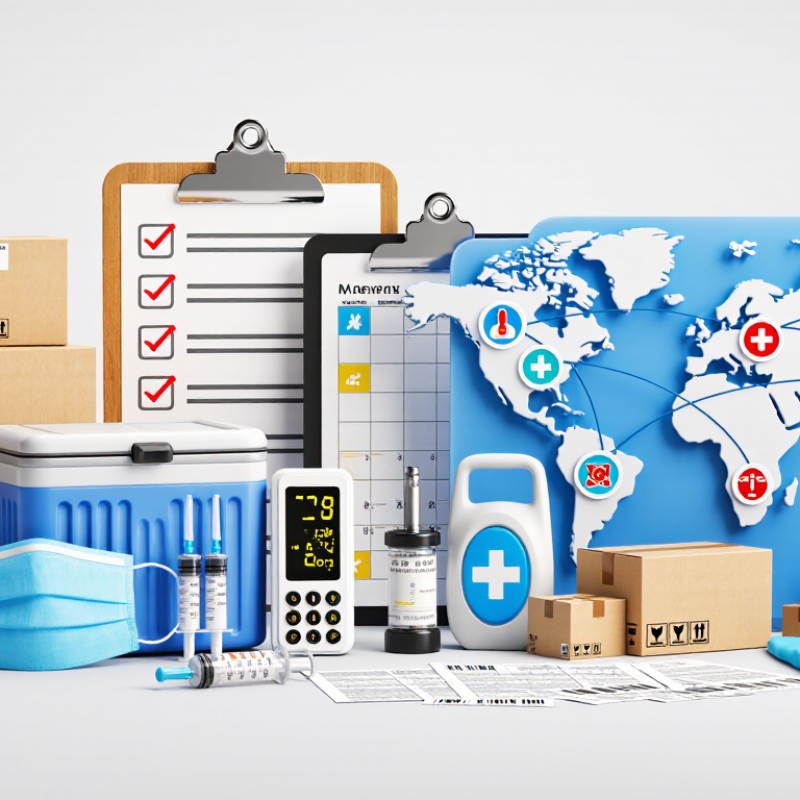
Medical suppliers in the United States connect healthcare providers with essential products, equipment, and technical support. They may distribute sterile gloves, diagnostic tools, hospital furniture, laboratory supplies, or monitoring equipment. Their role extends beyond selling products. Suppliers manage sourcing, inventory, packaging, documentation, and delivery coordination.
For global buyers, a reliable supplier should provide clear product specifications and traceable lot information. Each shipment may require an invoice, packing list, certificate of conformity, or storage instructions. Temperature-sensitive materials need controlled handling from the warehouse to the destination airport. Small details matter. A missing expiry date can delay customs review or disrupt clinical planning.
Experienced suppliers also help buyers understand product classification and applicable United States export requirements. They should explain limitations honestly instead of promising universal approval. Buyers still need to confirm import rules in their own countries. Regulatory responsibility cannot be transferred through a sales quotation. In practice, communication is often the weakest link. Time-zone differences, vague specifications, and changing demand can create avoidable errors. A careful supplier confirms quantities, packaging units, delivery terms, and required documents before accepting an order. Yet no process is flawless. Even established suppliers may need to correct a shipment record or revise a delivery schedule. That transparency is a practical sign of reliability.
A category-based overview of major U.S. medical-supply segments serving international procurement needs
| Rank | U.S. Supplier Segment | Typical Products | Primary Role for Global Buyers | Applicable U.S. Regulatory Touchpoint | Common Export Documents | Key Purchasing Consideration |
|---|---|---|---|---|---|---|
| 1 | Medical device manufacturers | Diagnostic equipment, monitoring devices, surgical instruments, and patient-care devices | Provide regulated equipment for hospitals, clinics, laboratories, and public-health programs | FDA device classification; 510(k), De Novo, or PMA pathways when applicable | Commercial invoice, packing list, certificate of origin, and applicable conformity documents | Market authorization, after-sales service, calibration, and spare-parts support |
| 2 | Disposable medical-product suppliers | Syringes, needles, examination gloves, masks, gowns, drapes, and wound-care items | Support high-volume, routine clinical consumption and infection-control programs | FDA device requirements and applicable quality-system controls; sterilization validation where relevant | Invoice, packing list, certificate of origin, sterility records, and product specifications | Lot traceability, shelf life, packaging integrity, and reliable replenishment |
| 3 | Pharmaceutical distributors | Prescription medicines, generic medicines, over-the-counter products, and hospital pharmaceuticals | Connect licensed manufacturers with hospitals, pharmacies, wholesalers, and government buyers | FDA drug approval and establishment requirements; prescription products require controlled distribution | Commercial invoice, packing list, certificate of analysis, batch information, and shipping records | Import licensing, remaining shelf life, temperature control, and product authenticity |
| 4 | Laboratory and diagnostic suppliers | Analyzers, laboratory consumables, test kits, specimen containers, and quality-control materials | Enable clinical testing, disease screening, research, and laboratory quality management | FDA in vitro diagnostic requirements; CLIA-related considerations for U.S. testing environments | Invoice, packing list, safety data where applicable, certificate of analysis, and product inserts | Test performance, reagent stability, instrument compatibility, and technical training |
| 5 | Hospital equipment suppliers | Patient monitors, infusion equipment, operating-room equipment, beds, and emergency-care systems | Equip healthcare facilities through project-based procurement and institutional supply contracts | FDA device authorization where applicable; electrical and safety requirements may also apply | Invoice, packing list, certificate of origin, user manuals, warranty terms, and installation documents | Installation capacity, operator training, maintenance response, and total cost of ownership |
| 6 | Dental product suppliers | Dental instruments, restorative materials, imaging equipment, chairs, and preventive-care products | Serve dental clinics, laboratories, universities, and public oral-health programs | FDA device or material requirements depending on product type; labeling obligations may apply | Invoice, packing list, certificate of origin, material information, and product instructions | Material safety, compatibility with existing systems, consumable availability, and training |
| 7 | Rehabilitation and mobility suppliers | Wheelchairs, walkers, patient lifts, orthotic supports, therapy equipment, and daily-living aids | Improve mobility, independence, home care, and post-acute rehabilitation outcomes | FDA device classification where applicable; accessibility and safety specifications are important | Invoice, packing list, certificate of origin, user instructions, and load or safety specifications | Fit, weight capacity, user safety, replacement parts, and local service capability |
| 8 | Home healthcare suppliers | Respiratory-care devices, blood-pressure monitors, glucose meters, wound-care products, and home-use aids | Support decentralized care, chronic-disease management, and home-based patient monitoring | FDA requirements for home-use devices; labeling must support safe operation by non-professionals | Invoice, packing list, certificate of origin, user manual, warranty, and electrical specifications | Ease of use, language localization, battery or power compatibility, and remote support |
| 9 | Cold-chain and specialty-care suppliers | Temperature-sensitive medicines, biologic products, specialty diagnostics, and insulated shipping systems | Protect product quality during storage and international transportation | Applicable FDA requirements plus documented temperature-control and handling procedures | Temperature logs, commercial invoice, packing list, airway bill, and handling instructions | Validated packaging, data logging, transit time, customs coordination, and excursion procedures |
| 10 | Emergency and public-health suppliers | Emergency medical kits, protective equipment, trauma supplies, screening materials, and outbreak-response goods | Provide rapid, scalable procurement for disasters, outbreaks, humanitarian missions, and national programs | Product-specific FDA requirements; emergency-use provisions may apply only under defined conditions | Invoice, packing list, certificate of origin, lot details, safety documentation, and donation paperwork when relevant | Stock availability, response time, volume scalability, shelf life, and humanitarian logistics |
Note: The ranking represents practical importance for international medical procurement by supplier segment, not a ranking of individual companies. Regulatory obligations vary by product, destination country, intended use, and distribution model.