Leave Your Message

What Is a Medical Mannequin Used For?

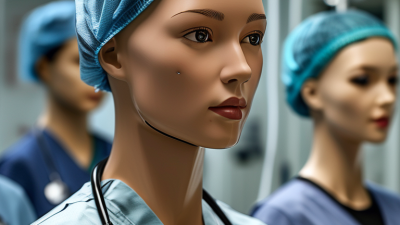
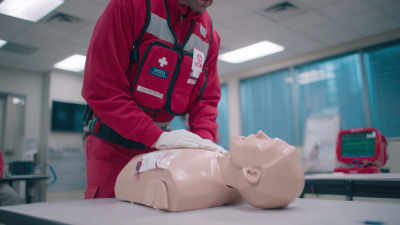
A Medical Mannequin is a training model used to help healthcare learners practise clinical skills in a controlled setting. Depending on its design, it may represent a newborn, child, or adult patient. Some models support basic tasks, such as positioning, bandaging, or CPR practice. More advanced versions can simulate breathing, pulses, or changes in vital signs. The equipment varies, so not every mannequin can perform every function.

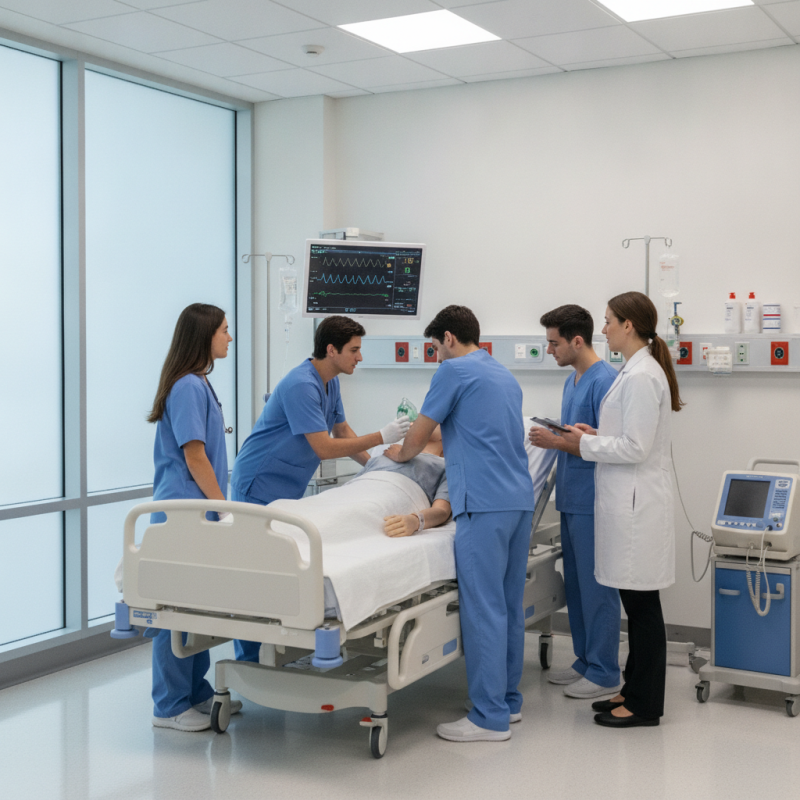
In classrooms and simulation centers, learners can rehearse procedures, communicate with a care team, and respond to changing scenarios without practising on a real patient. A mannequin may lie in a hospital bed while students check a monitor, explain each step, and practise using clinical equipment. Instructors can pause the exercise, offer feedback, and repeat a difficult task. Practice matters. These sessions can support confidence and help learners notice gaps in their technique, but a model cannot reproduce every human response or emotion. That limitation deserves attention. Real patients differ in their needs, histories, and reactions, so mannequin practice is only one part of preparation. Its value depends on thoughtful instruction, suitable equipment, and honest review after each scenario. Understanding what a Medical Mannequin is used for helps educators and learners choose the right model for a specific training goal.
What Is a Medical Mannequin Used For?

Types of Medical Mannequins and Their Capabilities

What Is a Medical Mannequin Used For? Types of Medical Mannequins and Their Capabilities

Medical mannequins range from simple body parts to responsive, full-body patient simulators. Each type supports different learning goals. A task trainer focuses on one procedure, such as placing an intravenous line or practicing wound care. Learners can feel resistance beneath the skin-like surface and repeat steps without involving a patient. These models are useful for building hand skills, but they cannot reproduce a complete clinical situation.

Full-body mannequins let teams practice patient assessment and coordinated care. Depending on the model, instructors can change breathing sounds, pulse, or vital signs during a scenario. Some respond to spoken questions or simulated treatments. That makes them useful for rehearsing communication as well as technical decisions. They are not all equally realistic, though. A lifelike face does not guarantee lifelike behavior.

Specialized mannequins serve particular patient groups and situations. Neonatal and pediatric models help learners practice age-specific assessment, while obstetric models support training in childbirth and related emergencies. Trauma mannequins may include wounds, bleeding effects, or removable limbs for focused exercises. Capabilities vary widely. Some models provide basic physical practice; others connect to software that records actions and guides instructor feedback. A mannequin can expose gaps in a team’s response, but it cannot capture every emotion or uncertainty of real care. That limitation is worth discussing after each session.
Practicing Clinical Procedures and Patient Care

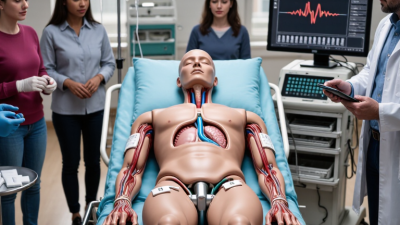
A medical mannequin gives learners a controlled place to practice clinical procedures and patient care before working with real patients. In a skills lab, they can check a pulse, measure blood pressure, position a patient, and practice explaining each step. Some mannequins simulate breathing, changing vital signs, or responses to treatment. Learners can rehearse recognizing a change and communicating it clearly to a care team. Small details count: gloves, monitor alarms, and a patient’s quiet question can shape the encounter. That realism helps. It is not the same as caring for a person.

In the 2014 NCSBN National Simulation Study, Hayden and colleagues followed 666 prelicensure nursing students. Participating programs that replaced up to 50% of traditional clinical hours with simulation had comparable measured outcomes to programs using more clinical hours. The finding concerns those nursing programs and carefully designed simulation; it does not establish that mannequins can replace patient contact everywhere. A mannequin can help instructors pause a scenario, repeat a procedure, and discuss what went wrong without risking patient safety. Yet learners may focus too much on equipment and miss the human side. I have to remind myself that a convincing monitor reading cannot teach empathy on its own. Source: Hayden et al., “The NCSBN National Simulation Study,” Journal of Nursing Regulation, 2014.

Simulating Emergencies and Complex Medical Conditions

A medical mannequin is used to rehearse emergencies before they happen to real patients. Instructors can simulate a sudden cardiac arrest, worsening asthma, severe bleeding, or a complicated birth. Trainees assess breathing, check a pulse, share findings, and respond as the mannequin’s condition changes. A monitor may show a falling oxygen level or a new abnormal rhythm. These details help teams practice decisions under pressure, not just individual procedures.

The American Heart Association’s 2024 Heart Disease and Stroke Statistics report estimates about 356,000 emergency-medical-services-assessed adult out-of-hospital cardiac arrests occur annually in the United States. Around 10% of patients survive to hospital discharge. Rehearsing clear role assignments and timely intervention can make emergency training more realistic. Still, a mannequin cannot reproduce every patient’s fear, pain, or unpredictable response. That matters. Instructors should pair simulation with reflection and explain where the scenario differs from bedside care.

Tips: Ask learners to verbalize what they notice, not only what they do. After each scenario, review one strong decision and one moment that needs reconsideration. Small pauses can reveal gaps in communication.

Medical Mannequins for Emergency Simulation: Oxygen Saturation Over Time

This illustrative scenario shows how a medical mannequin can help learners recognize changing vital signs and practice team responses during a simulated respiratory emergency. Values are hypothetical training data, not patient data or treatment guidance.

Developing Teamwork and Clinical Decision-Making

A medical mannequin turns teamwork into a skill people can rehearse, not just discuss. In a simulation room, one clinician checks breathing while another reads the monitor and a third calls for help. The team must share observations, assign roles, and update its plan as the patient’s condition changes. Small details matter: a missed handover or unclear instruction can delay action.

The World Health Organization’s 2024 Global Patient Safety Report estimates that about one in ten patients experiences harm in healthcare. That risk makes practice with realistic scenarios valuable. A National Council of State Boards of Nursing study followed 666 students at 10 schools. It found no significant difference in key outcomes when high-quality simulation replaced up to half of clinical hours. Mannequins let teams pause, repeat a scenario, and discuss why a decision worked—or did not. Still, practice can feel tidy compared with a real ward. A mannequin cannot feel fear, and a rehearsed team may still miss a cue. That gap deserves honest reflection.

What Is a Medical Mannequin Used For? - Developing Teamwork and Clinical Decision-Making

Training Scenario Mannequin Features Used Teamwork Skills Practiced Clinical Decisions Practiced Debriefing Focus
Adult cardiac arrest Chest compressions, airway management, simulated pulse and rhythm display Assigning team roles, closed-loop communication, and coordinating task changes Recognizing cardiac arrest, starting CPR, using an AED or defibrillator according to training protocols, and reassessing the patient Compression quality, timing, role clarity, and communication under pressure
Acute breathing difficulty Observable chest movement, breath sounds, oxygen saturation display, and adjustable vital signs Sharing assessment findings, calling for support, and coordinating respiratory care Assessing airway and breathing, identifying deterioration, and selecting appropriate escalation steps Whether the team noticed changes early and communicated a clear plan
Sepsis recognition Changing vital signs and scenario prompts that represent a deteriorating patient Dividing assessment and monitoring tasks, reporting concerns, and using structured handover Recognizing possible sepsis, escalating care, and following local clinical protocols Timely recognition, prioritization, and completeness of information shared
Medication administration Medication-administration practice features and a simulated patient record Confirming responsibilities, checking information with a colleague, and speaking up about discrepancies Applying medication-safety checks and pausing to resolve an unclear or inconsistent order Verification habits, appropriate clarification, and prevention of avoidable errors
Postoperative deterioration Adjustable vital signs, patient responses, and simulated monitoring data Escalating concerns, coordinating reassessment, and handing over key findings Interpreting trends, identifying deterioration, and following escalation procedures How effectively the team connected changing observations to its next actions
Maternal or newborn emergency Scenario-specific patient or newborn features, with simulated vital signs and responses Coordinating roles, communicating clearly, and requesting appropriate assistance Recognizing an emergency and carrying out actions appropriate to the scenario and local protocols Role allocation, communication, and coordinated response across the care team

Assessing Skills and Improving Training Outcomes

A medical mannequin turns checklists into observable actions. Instructors can assess hand placement, airway positioning, medication checks, and communication during a timed scenario. They can pause, repeat, and record each attempt. That matters.

The National Council of State Boards of Nursing’s 2014 National Simulation Study followed 666 prelicensure nursing students at 10 schools. It found no significant differences in clinical competency, nursing knowledge, or licensure-exam pass rates when simulation replaced up to 50% of clinical hours. This is useful evidence, not a guarantee that every mannequin or lesson produces the same results.

Assessment works best when learners know what will be observed. A rubric might track whether a trainee checks breathing, calls for help, and explains actions clearly. Feedback should name the missed step, then allow another attempt.

A 2011 meta-analysis by McGaghie and colleagues reported a 0.71 effect size for simulation with deliberate practice compared with traditional clinical education. Still, plastic skin cannot show a patient’s fear, and a scripted scenario may feel too neat. That gap deserves attention.

Pair mannequin practice with thoughtful debriefing, and assess not only the task, but also how learners adapt when the situation changes.