Leave Your Message

7 Tips for Buying the Right Medical Mannequin

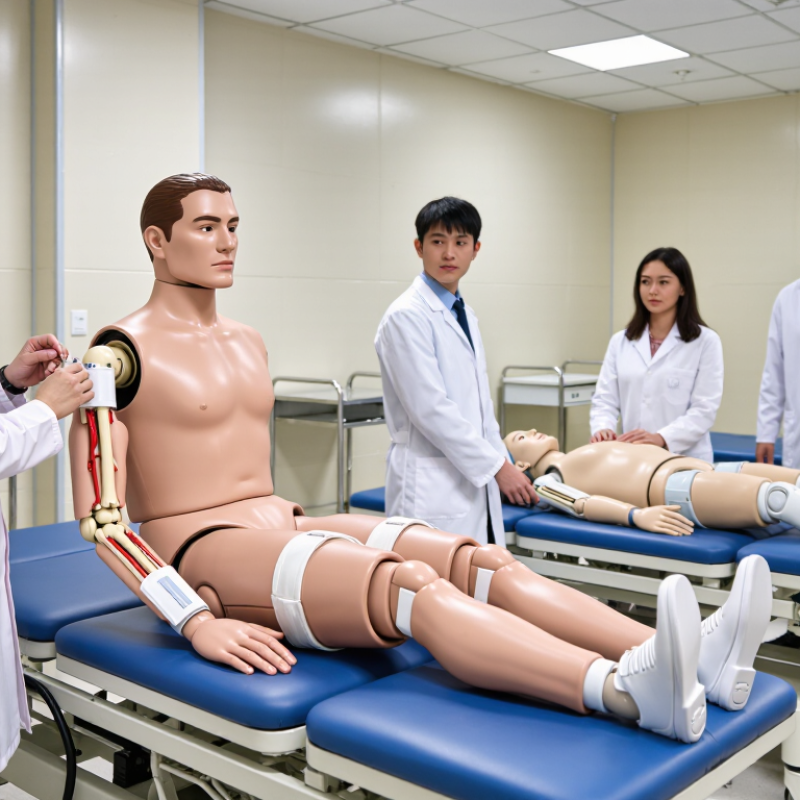
Choosing the right Medical Mannequin is more than comparing prices and realistic skin tones. It affects how confidently learners practise airway management, injections, wound care, or patient transfer. A mannequin that looks impressive may still have stiff joints, fragile connectors, or limited feedback. That mismatch can waste training time and budget.

This guide examines seven practical considerations before purchase. They include training goals, anatomical realism, durability, cleaning requirements, technology, support, and total cost. Each point connects classroom needs with everyday use. A nursing school may need replaceable injection pads and easy storage. An emergency training center may prioritize chest rise, palpable pulses, and repeated CPR performance. Manufacturer specifications matter, but hands-on demonstrations reveal details that brochures often omit.

Small decisions matter. Check the weight before delivery. Inspect the seams. Ask how quickly spare parts arrive. Confirm whether instructors can clean the surface without damaging it. A reliable supplier should provide clear manuals, warranty terms, maintenance guidance, and evidence of product testing. Claims should be examined carefully, especially when “lifelike” features are described without measurable details.

No model fits every program. Even careful buyers can misjudge classroom space, learner numbers, or maintenance demands. That is worth reflecting on. The most advanced option may create unnecessary complexity, while a basic model may limit future lessons. These seven tips offer a practical framework for comparing capabilities, risks, and long-term value. The final choice should support safe, repeatable, and well-supervised training.

7 Tips for Buying the Right Medical Mannequin

Define Training Objectives Using the 3-Tier Simulation-Fidelity Model

7 Tips for Buying the Right Medical Mannequin

Define Training Objectives Using the 3-Tier Simulation-Fidelity Model

A medical mannequin should match the skill, not simply look realistic. The three-tier model helps buyers make that decision with greater discipline. Low-fidelity models support basic positioning, anatomy recognition, and repeated procedural movements. They are useful for early learners and large-group practice. Choose durable materials, clear landmarks, and simple cleaning requirements. A realistic face adds little if students cannot practice the target skill.

Medium-fidelity mannequins add selected functions, such as palpable pulses, airway response, or basic heart sounds. They work well for focused assessment and communication drills. Check whether the controls are intuitive during a busy class. Small delays can interrupt learning. Ask instructors to test the unit before purchase. A short trial often reveals awkward tubing, fragile connectors, or poor visibility. Those details matter.

High-fidelity systems support changing vital signs, clinical deterioration, and team-based decisions. Buy this level only when your objectives require judgment under pressure. Confirm the system supports realistic scenarios, instructor control, data recording, and reliable maintenance. Technical complexity can become a weakness. Staff may spend more time fixing software than teaching care. That is an uncomfortable possibility, but it deserves attention. Review service access, replacement parts, training needs, and total ownership costs. The most advanced mannequin is not always the most educational choice.

7 Tips for Buying the Right Medical Mannequin

Define training objectives using the 3-Tier Simulation-Fidelity Model

Use this planning rubric to match mannequin capability with the intended learning objective. Low-fidelity models support basic knowledge and task practice, medium-fidelity models add physiological responses and structured assessment, while high-fidelity models support integrated clinical decision-making, communication, and team training. Scores indicate recommended priority on a 1–5 scale, not manufacturer performance ratings.

Compare Anatomical Accuracy, Sensor Systems, and 100+ Possible Clinical Skills

Tip 1: Examine anatomical accuracy before counting features. A useful mannequin should reproduce landmarks, tissue resistance, and realistic movement. Check the airway, ribs, veins, and injection sites closely. Small errors can teach large mistakes. I have seen learners locate structures correctly on paper, then struggle with a poorly shaped model.

Tip 2: Compare sensor systems with your teaching goals. Some sensors track hand position, compression depth, ventilation volume, or needle angle. Others provide only basic completion signals. Choose feedback that instructors can review after practice. Clear data supports safer coaching. However, sensor readings are not clinical truth. They need calibration, regular testing, and thoughtful interpretation.

Tip 3: Map the mannequin against more than 100 possible clinical skills. Include airway management, wound care, catheter practice, medication preparation, patient assessment, and emergency response. Confirm whether one unit supports adult, pediatric, or specialized scenarios. Modular parts can reduce replacement costs, but frequent changes may slow training. That trade-off deserves honest discussion.

Ask instructors to test the mannequin before purchase. Let them perform familiar procedures under realistic time limits. Observe whether the skin tears, joints loosen, or software becomes distracting. Review cleaning instructions, repair access, warranty terms, and instructor training. A highly advanced system may still fail if staff cannot maintain it. The best choice balances anatomical realism, dependable sensors, practical skill coverage, and everyday usability.

Verify Compliance with ISO 13485 and IEC 62366-1 Design Standards

7 Tips for Buying the Right Medical Mannequin

Verify Compliance with ISO 13485 and IEC 62366-1 Design Standards

A medical mannequin should support safe, repeatable training, not merely look realistic. Ask whether the manufacturer operates an ISO 13485 quality management system. Request the certificate, issuing body, validity date, and exact scope. A certificate alone proves little if the mannequin falls outside that scope. Check design records, change controls, supplier oversight, and complaint handling. These details reveal how consistently the product is built.

Review the usability engineering process under IEC 62366-1. Ask how intended users, use environments, and foreseeable errors were identified. Watch a demonstration involving a gloved learner, a crowded bedside, and limited lighting. Look for awkward tubing, unclear connection points, or excessive force during procedures. Test cleaning between sessions. Examine skin materials, joints, valves, and replacement parts. Tip three: inspect traceability labels. Tip four: confirm maintenance instructions. Tip five: request validation evidence for critical functions. Tip six: compare the training interface with real clinical workflows. Tip seven: document every unanswered question.

Do not confuse compliance with clinical suitability. ISO 13485 addresses the quality system, while IEC 62366-1 addresses usability engineering. Neither standard guarantees that one mannequin fits every curriculum. A polished evidence folder can still hide poor ergonomics. No checklist catches everything. Let instructors and representative learners handle the mannequin before purchase. Record their comments, including small frustrations. A hand that slips, a port that feels unrealistic, or software that confuses beginners may become a repeated training error. Revisit the decision after a pilot session, because initial impressions are often incomplete.

7 Tips for Buying the Right Medical Mannequin - Verify Compliance with ISO 13485 and IEC 62366-1 Design Standards

No. Buying Tip Evaluation Dimension What to Verify Objective Evidence or Acceptance Criteria Risk if Missed
1 Define the intended use Training purpose and user profile Confirm whether the mannequin is intended for basic skills practice, advanced clinical simulation, assessment, research, or device testing. Identify expected users, such as students, nurses, physicians, or emergency responders. A documented intended-use statement, defined user groups, training scenarios, operating environment, and clearly stated limitations. Determine whether medical-device regulations apply to the specific intended use. The mannequin may not support the required procedure, user group, or regulatory pathway.
2 Check ISO 13485 quality-system evidence Manufacturing and quality management Ask whether the manufacturer operates a quality management system certified to ISO 13485:2016, where applicable to the product and market. Verify the scope, certificate status, and certification body. A current certificate showing ISO 13485:2016, an applicable scope covering design and/or manufacture, certificate validity dates, and an identifiable accredited certification body. ISO 13485 certification alone does not prove product performance or regulatory approval. Weak control of design changes, suppliers, records, complaints, or corrective actions.
3 Review usability-engineering controls IEC 62366-1 design and use safety For products within the applicable medical-device scope, determine whether the design process considers user characteristics, use environments, use errors, critical tasks, and reasonably foreseeable misuse. Request relevant usability-engineering records, including a use specification, user-interface evaluation, use-related risk analysis, formative or summative evaluation results, and user instructions. IEC 62366-1 is a process standard; it is not a product certification label. Incorrect setup, confusing controls, or preventable use errors during training or assessment.
4 Match clinical functions to the curriculum Anatomy, procedures, and measurable responses Compare the mannequin's functions with the required procedures, including airway management, cardiopulmonary resuscitation, vascular access, wound care, childbirth, patient assessment, or other specified skills. A traceability matrix linking every required learning objective to a demonstrated mannequin function, such as anatomical landmarks, physiological responses, feedback, and scenario controls. Learners practice incomplete or unrealistic steps and cannot be assessed consistently.
5 Verify materials and infection-control requirements Cleaning, durability, and compatibility Confirm skin and airway materials, fluid pathways, replaceable parts, cleaning agents, disinfectant compatibility, drying requirements, and restrictions on invasive or sharps procedures. A manufacturer cleaning and disinfection procedure, validated or documented compatibility information, defined replacement intervals, and a list of prohibited chemicals or procedures. Do not assume the mannequin is suitable for clinical patient decontamination protocols. Material cracking, discoloration, microbial contamination, inaccurate performance, or premature component failure.
6 Assess technical performance and integration Reliability, software, and interoperability Evaluate sensor accuracy, feedback latency, power requirements, connectivity, software updates, data export, cybersecurity controls, and compatibility with the institution's audiovisual or learning-management systems. Documented operating specifications, acceptance-test results, backup and recovery procedures, access-control information, software-version records, and a live demonstration using the planned training workflow. Interrupted sessions, unreliable assessment data, integration delays, or loss of training records.
7 Confirm lifecycle support and procurement controls Serviceability, documentation, and total cost Review warranty terms, preventive maintenance, spare-part availability, calibration or verification needs, technical support, staff training, delivery requirements, and end-of-life arrangements. A written service-level agreement, parts and support availability period, user and maintenance manuals, installation qualification checklist, acceptance-test protocol, and a total-cost estimate covering consumables, repairs, software, and training. High downtime, unexpected ownership costs, unavailable parts, or inability to maintain training consistency.

Important: ISO 13485:2016 addresses quality-management systems for organizations involved in the medical-device lifecycle, while IEC 62366-1 addresses usability-engineering processes for medical devices. Applicability should be confirmed against the mannequin's intended use, configuration, and target market.

Calculate Total Cost per Learner Across a 5-Year Equipment Life Cycle

7 Tips for Buying the Right Medical Mannequin

Calculate Total Cost per Learner Across a 5-Year Equipment Life Cycle

A low purchase price can hide expensive training gaps. Define the learners, clinical scenarios, and annual sessions before comparing mannequins. Tip one: estimate realistic learner encounters, not ideal attendance. Tip two: record the purchase price, shipping, installation, software, and required accessories. A spreadsheet helps.

Include instructor training and setup time. Those hours affect the budget. Add cleaning supplies, replacement skin, batteries, sensors, and routine servicing. Ask for documented maintenance intervals and response times. Tip three: estimate annual operating costs. Tip four: include expected downtime. A mannequin that sits unused for three weeks can disrupt several classes.

Tip five: calculate five-year ownership cost. Add purchase and operating expenses, then subtract any credible residual value. Divide that figure by the projected number of learner completions. For example, $24,000 in total costs divided by 1,200 learners equals $20 per learner. Use conservative enrollment figures. Attendance is rarely perfect. Tip six: test the calculation with low, expected, and high usage. This reveals whether the mannequin remains practical during enrollment changes.

Tip seven: assess clinical realism alongside cost. A cheaper model may require extra faculty explanation or repeated practice sessions. That hidden cost matters. Ask educators to observe a demonstration, inspect repair access, and document the skills supported. Our estimates can still be wrong. Review them every year, especially after repairs, curriculum changes, or unexpected storage problems.

Assess Vendor Support, Warranty Terms, Software Updates, and User Data Security

Buying a medical mannequin requires more than checking movement, airway design, or skin texture.

In training sessions, support quality often matters after delivery. Ask who answers technical calls, how quickly, and whether help is available during evenings or weekends. Request a sample escalation process, not a cheerful promise. A short video call can reveal whether support staff understand clinical workflows. Keep their answers in writing.

Read the warranty carefully. Define covered parts, labor, shipping, batteries, sensors, and accidental damage. A low price can become expensive when a replacement valve takes six weeks. Ask how repairs affect calibration records.

Also examine software update policies. Updates should fix errors, improve compatibility, and preserve existing lesson plans. Confirm update frequency, testing procedures, installation requirements, and offline options. A stable simulator should not become unusable because an old laptop cannot run new software. I once underestimated this risk; compatibility questions should have come earlier.

User data security needs equal scrutiny. Determine what data the mannequin collects, where it is stored, and who can access it. Check for role-based permissions, encryption, retention controls, deletion tools, audit logs, and reliable backups.

Ask for security documentation and independent testing evidence. Test account removal before purchase. It sounds minor. It is not. Store only necessary learner details, and restrict exports to authorized instructors. Procurement teams should involve IT and clinical educators together, because a secure system may still encourage unsafe classroom habits.