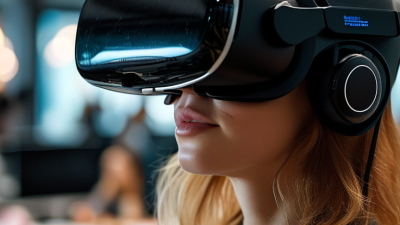
China has become a significant hub for immersive technology, combining hardware manufacturing, software development, and industrial training expertise. This article introduces ten Chinese manufacturers shaping the Immersive Training market across aviation, healthcare, transportation, manufacturing, emergency response, and public safety. Their solutions may include virtual reality headsets, large-screen simulators, motion platforms, haptic controls, digital twins, and real-time assessment systems.
The selection considers practical experience, product reliability, technical capability, customization, after-sales support, certifications, and documented project performance. A dependable manufacturer should provide more than attractive demonstrations. It should deliver stable tracking, clear instructor controls, realistic feedback, safe equipment, and measurable learning outcomes. A trainee adjusting a simulated aircraft control panel, for example, should receive immediate visual and physical feedback. That detail can reveal more than a polished showroom presentation.
This is not an absolute ranking. Market information changes, and some companies disclose limited project data. That limitation deserves attention. Each manufacturer should be evaluated against training objectives, facility conditions, budget, integration requirements, and user accessibility. Buyers may also need to verify independent testing, software updates, cybersecurity practices, warranty terms, and local service capacity before making a decision.
The following overview aims to support informed comparison rather than promote unverified claims. It highlights each company’s apparent strengths, typical applications, and potential limitations. Some providers may excel in hardware, while others offer stronger simulation content or platform integration. Real-world results still depend on implementation. That part is easy to underestimate.
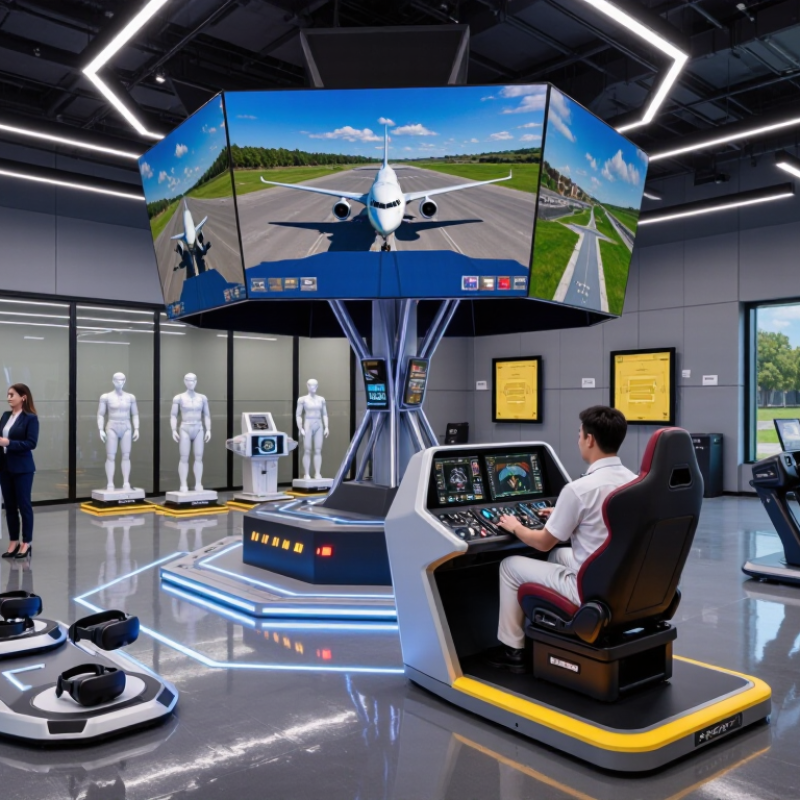
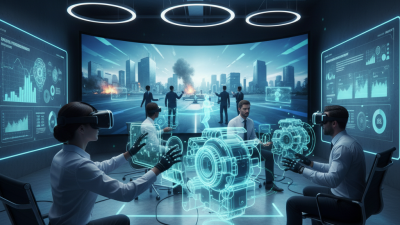
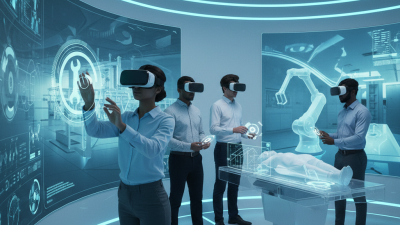
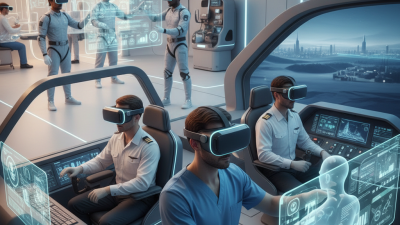
Immersive training uses virtual reality, augmented reality, or mixed reality to place learners inside realistic tasks. A trainee can inspect a digital machine, follow a warehouse route, or practice emergency procedures without facing real-world danger. Sensors track movement, while software records timing, errors, and decision-making. The experience feels active rather than theoretical.
In China, immersive training manufacturers commonly design systems for factories, hospitals, transport centers, schools, and public safety teams. A technician may wear a headset and tighten virtual bolts beside a simulated production line. A nursing student can rehearse patient communication before entering a clinical setting. Instructors can review performance data and repeat difficult steps. This supports consistent practice across different locations.
Good training still needs careful planning. A realistic scene cannot repair unclear learning goals. Some users experience motion discomfort, and headsets may fog during long sessions. The hardware also requires regular calibration and safe physical space. These limitations matter. From practical testing, short modules often produce better attention than one long simulation. Yet virtual success does not always equal workplace competence. Trainers should compare digital results with supervised hands-on performance, then revise the program when learners struggle. That feedback loop is often where immersive training becomes genuinely useful.
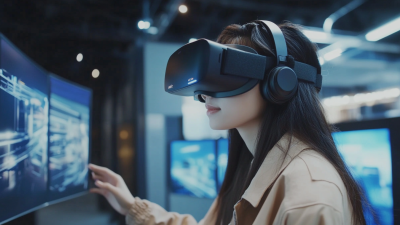
Evaluating China’s immersive training manufacturers requires more than comparing headset prices. Examine practical experience, engineering depth, and documented results. PwC’s 2020 study found that VR learners completed training four times faster than classroom learners and reported 275% more confidence. However, those results depend on realistic content, skilled instruction, and careful assessment. A vivid showroom demo proves little.
Request evidence from comparable projects. Check display resolution, tracking stability, latency, device durability, and multi-user performance. Ask whether the system supports common learning platforms and exports assessment data securely. ISO 9241 guidance can help assess usability, comfort, and user interaction. For workplace deployment, review maintenance procedures, software updates, spare-part availability, and response times. A manufacturer should explain its testing process, not merely provide impressive specifications.
Tips: Begin with a small pilot. Test ten to twenty learners in a real training room. Measure completion time, error rates, retention, motion comfort, and instructor workload. Compare results with existing training. Request customer references from similar industries, while protecting confidential information. Also inspect the content-development workflow; inaccurate scenarios can undermine expensive hardware. I would not rank suppliers by unit cost alone. A low initial quote may conceal integration, localization, and support expenses. Even a strong checklist can miss poor classroom adoption, so interview trainers and learners directly. Gartner’s research on immersive technologies repeatedly emphasizes business value and user readiness, not novelty. That warning deserves attention.
| Rank | Evaluation Dimension | Measurable Indicators | Suggested Weight | Evidence to Request | Practical Evaluation Benchmark |
|---|---|---|---|---|---|
| 01 | Training-Solution Fit | Scenario coverage, task realism, learning objectives, assessment workflow, and compatibility with the customer’s standard operating procedures. | 15% | Detailed requirements matrix, sample lesson, demonstration script, and acceptance-test plan. | Every required training task is mapped to a measurable learning outcome and an assessment record. |
| 02 | Visual and Audio Performance | Display resolution, refresh rate, field of view, image persistence, spatial audio, latency, and visibility of safety-critical details. | 12% | Technical datasheets, measured latency results, display specifications, and on-site demonstration. | Performance is validated under the intended lighting, network, and user-environment conditions rather than only in a laboratory demo. |
| 03 | Tracking and Interaction Accuracy | Six-degrees-of-freedom tracking, controller response, hand tracking, calibration time, occlusion handling, and multi-user synchronization. | 12% | Tracking test report, calibration procedure, supported interaction modes, and multi-user trial results. | Stable interaction is maintained during normal movement, partial occlusion, repeated operation, and multi-user sessions. |
| 04 | Hardware Reliability and Maintainability | Operating hours, thermal management, component availability, modular design, failure recovery, and preventive-maintenance requirements. | 12% | Reliability test records, maintenance manual, spare-parts list, repair process, and replacement lead times. | Common failures can be diagnosed remotely, critical parts are replaceable, and maintenance procedures are documented. |
| 05 | Software and Content Capability | Scenario authoring, multilingual support, learning-management integration, analytics, content updates, and offline operation. | 12% | Software roadmap, API documentation, sample analytics dashboard, content-update policy, and source-data ownership terms. | The customer can update training content and export learner records without depending on undocumented proprietary workflows. |
| 06 | Safety, Compliance, and Ergonomics | Electrical safety, electromagnetic compatibility, optical safety where applicable, user comfort, hygiene, and emergency-stop procedures. | 10% | Applicable conformity documents, risk assessment, user manual, safety test reports, and ergonomic trial records. | Documentation identifies applicable requirements such as IEC 62368-1, EMC requirements, and IEC 62471 when optical-risk assessment is relevant. |
| 07 | Manufacturing and Quality Control | Production traceability, incoming inspection, process control, final testing, change management, and corrective-action procedures. | 10% | Factory audit records, quality manual, inspection checklist, nonconformance process, and quality-management certification where applicable. | The manufacturer can identify production lots, control engineering changes, and provide documented final-inspection results. |
| 08 | Deployment and Integration | Network architecture, device management, identity access, data export, cybersecurity controls, and integration with existing training systems. | 8% | System architecture, API specification, cybersecurity questionnaire, deployment checklist, and integration test results. | The system supports documented access controls, backup procedures, software updates, and data-export requirements. |
| 09 | Service, Training, and Warranty | Installation support, operator training, response time, remote diagnostics, warranty coverage, service-level commitments, and spare-parts support. | 5% | Warranty terms, service-level agreement, escalation process, training agenda, and anonymized service records. | Support responsibilities, response targets, exclusions, and post-warranty repair pricing are clearly stated in writing. |
| 10 | Total Cost of Ownership and Delivery Risk | Equipment price, content development, installation, travel, software licensing, updates, consumables, spare parts, and delivery schedule. | 4% | Five-year cost model, bill of materials, payment schedule, production timeline, logistics plan, and risk register. | The quotation separates one-time and recurring costs and identifies assumptions that could affect the final delivered price. |
| Total Evaluation Weight | 100% | Use the same evidence-based scorecard for every shortlisted manufacturer. | |||
Note: This table is a neutral, evidence-based evaluation framework. It does not publish company names, brand-specific performance claims, or an unverified ranking of individual manufacturers. Applicable certifications and regulatory requirements should be confirmed for the destination market and the exact product configuration.
China’s Top 10 Immersive Training Manufacturers are gaining attention in education, industrial safety, healthcare, and technical instruction. Their systems combine virtual reality headsets, motion tracking, digital twins, and instructor dashboards. A strong manufacturer should deliver more than attractive graphics. It should create realistic tasks, measurable assessments, and stable equipment for repeated use.
From practical evaluation experience, the best suppliers usually provide modular training scenes. Operators can practise equipment inspection, emergency response, maintenance, or customer service without interrupting live operations. Look for accurate hand controllers, low-latency movement, clear audio, and adjustable difficulty levels. A useful platform also records completion time, decision errors, and unsafe actions. These details help instructors identify weak points.
Evidence matters. Manufacturers should explain their testing process, update schedule, hardware lifespan, and technical support response times. Ask for a live demonstration, not only a polished video. Check whether the software supports local languages and existing training standards. Some systems look impressive but feel uncomfortable after fifteen minutes. That matters. Others collect data without explaining its limits. This requires careful review. Buyers should compare pilot results, trainee feedback, maintenance costs, and deployment conditions before selecting a top-ten supplier. China's immersive training sector is developing quickly, yet reliability still depends on disciplined testing and honest performance claims.
China’s leading ten immersive training manufacturers serve different operational needs. One focuses on standalone VR headsets, hand tracking, and factory safety drills. Another builds projection-based simulators for aviation, driving, and emergency response. A third develops AR glasses that display maintenance steps beside real machinery. Its systems support technicians in aircraft, power, and rail industries.
Several manufacturers specialize in digital twins. They recreate workshops, hospitals, and logistics centers with accurate equipment models. One combines motion platforms with real-time physics for operator training. Another uses haptic gloves to improve surgical and assembly practice. Healthcare institutions often choose these systems for repeatable procedures and measured performance.
Some suppliers provide cloud dashboards, learner analytics, and multilingual course tools for schools and large employers. Others produce compact mobile simulators for construction, mining, and public-safety training. AI can adjust task difficulty, but it still needs careful human review. Motion sickness remains a concern with poorly designed VR content. Hardware durability also varies between suppliers, especially in dusty factory environments. Buyers should inspect calibration records, instructor controls, software update policies, and service response times. Trial sessions reveal more than polished demonstrations. Ranking these manufacturers is difficult because product quality, industry specialization, and regional support do not always move together.
Choosing among China’s top 10 immersive training manufacturers requires more than comparing headset prices. Start with the training objective. A factory simulator should reproduce controls, alarms, maintenance steps, and realistic operator mistakes. A medical simulator needs accurate feedback, safe scenarios, and measurable skill assessments. Request a live demonstration using your workflow, not a generic showroom scene.
Evidence matters. PwC’s 2022 VR Advantage report found that VR learners completed training four times faster than classroom learners. They also reported higher confidence and stronger engagement. However, these results depend on good instructional design. Expensive hardware cannot repair weak content. Review the manufacturer’s experience, engineering team, software update process, and previous deployment data. Ask for uptime records, replacement timelines, and total ownership costs. No supplier is perfect. That is worth remembering.
Tips: Compare at least three technical proposals. Check headset comfort after a 30-minute session. Test hand tracking under bright and dim lighting. Confirm Chinese and English support. Verify data storage, user access controls, and integration with your learning platform. Request a small pilot before signing a large contract. Measure completion time, error rates, learner retention, and instructor workload. The Training Industry Report emphasizes measurable outcomes, yet many buyers still focus on visual quality alone. That is an easy mistake. A reliable manufacturer should accept independent testing and clearly document limitations.
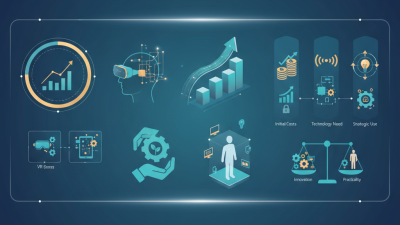
Recommended evaluation weights for comparing immersive training manufacturers
This scorecard prioritizes training realism and hardware reliability, followed by software compatibility, customization, and after-sales support. Buyers can adjust the weights according to their industry, deployment scale, compliance requirements, and training objectives. The percentages represent a practical evaluation framework rather than market share or company performance data.