China Top VR Healthcare Training Innovations Transforming Medical Education?
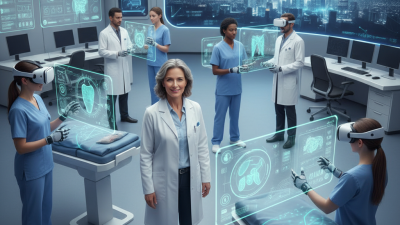
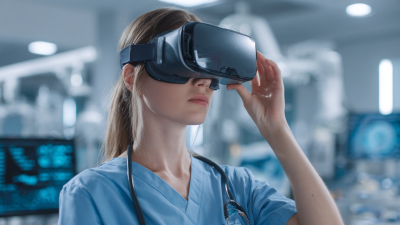
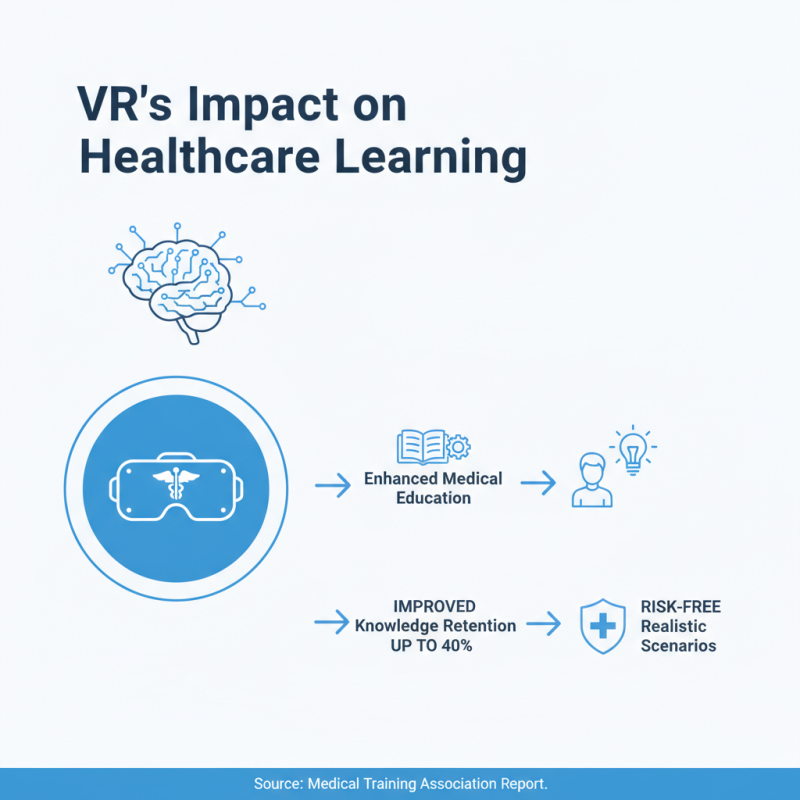
In recent years, VR healthcare training has emerged as a pivotal tool in medical education. Innovative platforms are transforming traditional methods, allowing healthcare professionals to practice in simulated environments. This technology offers realistic scenarios that enhance learning and retention.
With the rise of VR healthcare training, students can experience real-life situations without risk. These simulations provide immediate feedback and encourage critical thinking. By practicing complex procedures in a safe space, learners can build confidence. However, the reliance on technology raises questions about preparedness in real-world settings.
The integration of VR in teaching medicine represents significant progress. Yet, it also challenges educators to ensure these tools align with clinical standards. As VR healthcare training evolves, continuous evaluation is essential to maximize its effectiveness and reliability. Reflection on its limitations will ensure it complements traditional education methods.
Emergence of VR Technology in Healthcare Training in China
Virtual Reality (VR) technology is making significant strides in healthcare training within China. Recent reports show that the VR healthcare training market is anticipated to reach over $2 billion by 2025. The technology provides immersive experiences that enhance learning outcomes. Medical professionals can practice procedures in a risk-free environment, improving their skills before facing real patients.
One key advantage of VR in medical education is its ability to simulate complex scenarios. Trainees can engage in surgical practices, patient assessments, and emergency response drills. According to the Journal of Medical Internet Research, 60% of medical students found VR simulations helped them retain information better compared to traditional training methods. This innovative approach allows for personalized learning experiences, which can cater to individual pacing.
Tips: Integrating VR into training can reduce costs associated with physical materials and equipment. Keep an open mind about this technology. While it’s promising, challenges exist in standardizing VR training protocols. Institutions need to evaluate their effectiveness rigorously. Adapting to new technology raises questions about accessibility and practicality. Exploring these concerns is crucial for maximizing VR's potential in medical education.
Key Innovations in VR for Medical Education
Virtual Reality (VR) is revolutionizing medical education in China. It offers immersive experiences for healthcare training. Students can practice surgeries or patient interactions in a risk-free environment. This technology bridges the gap between theory and practical application effectively.
One notable innovation is the use of VR simulations. These allow trainees to face real-life scenarios. They can respond to emergencies without the pressure of actual consequences. However, some educators are concerned about the lack of tactile feedback in these simulations. It's not the same as working with real patients or tools.
Tips: Incorporating VR into the curriculum can enhance learning. Ensure students also gain hands-on experience. Balance is key. While VR prepares them for situations, traditional methods remain essential. Continuous feedback on VR training is important. It can help refine these educational tools for better outcomes.
Innovations in VR for Medical Education
Challenges and Future Directions for VR in Medical Training
Virtual reality (VR) is revolutionizing medical training in China, offering immersive experiences that enhance learning. However, the implementation of VR in healthcare education presents several challenges. One major issue is the cost of equipment. Many medical institutions struggle to allocate funds for the necessary technology, limiting access to this innovative training method.
Another challenge is the development of high-quality, realistic simulations. VR experiences must accurately mimic real-life scenarios for effective learning. Creating these simulations requires collaboration between software developers and medical professionals, which can be a complex process. Additionally, educators need to be trained in VR technology to ensure that they can effectively guide students through these new learning modules.
The future of VR in medical training depends on addressing these challenges. Increased investment from both public and private sectors could enhance accessibility. Moreover, encouraging partnerships between tech companies and educational institutions can lead to better simulations. Emphasizing user feedback in VR design will result in more intuitive and effective training tools. As VR technology continues to develop, its potential to transform medical education remains promising yet requires careful navigation.
China Top VR Healthcare Training Innovations Transforming Medical Education
| Innovation |
Description |
Benefits |
Challenges |
Future Directions |
| Virtual Reality Simulations |
Immersive training environments for surgical procedures. |
Enhanced hands-on experience, reduced risk during training. |
High setup costs, technical issues, and user acceptance. |
Integration into standardized training curricula. |
| Remote Training Capabilities |
Allows for training from remote locations with VR technology. |
Access to expert training regardless of geography. |
Dependence on internet connectivity and technology. |
Expand reach to underserved areas through VR sessions. |
| Gamification of Learning |
Incorporating game elements in medical training scenarios. |
Increased engagement and motivation in learners. |
Balancing educational content with gaming elements. |
Develop more complex simulations and scenarios for learning. |
| AI Integration in VR |
Using AI to create adaptive learning paths in VR training. |
Personalized training experiences based on individual progress. |
Need for ongoing data input and algorithm refinement. |
Enhancing real-time feedback mechanisms. |
Case Studies of Successful VR Implementations in Chinese Medical Schools
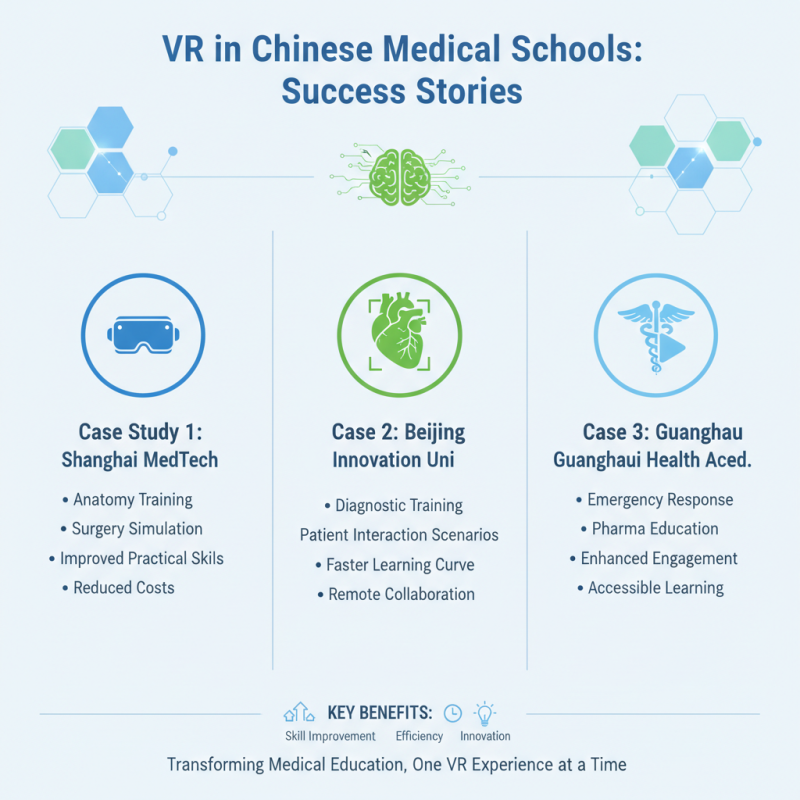
Virtual reality (VR) is changing medical education in China. Several medical schools have implemented VR technology in innovative ways. These case studies highlight practical applications of VR, offering insights into its benefits and challenges.
One notable example involves a medical school that introduced VR simulations for surgical practice. Students could interact with 3D models of human anatomy. This hands-on approach improved their understanding of complex procedures. However, some students found it difficult to adapt to the technology. Feedback suggested that while engagement increased, not all felt comfortable with VR-based learning. The learning curve remains a concern.
Another school used VR for patient interaction training. Students practiced communication skills in simulated environments. This method allows for real-time feedback from instructors. Yet, some educators noticed that VR could not fully replicate real-world scenarios. Emotions and dynamics in live interactions are challenging to imitate. These experiences provide valuable lessons for future VR implementations in medical training, encouraging ongoing dialogue about limitations and improvements.