2026 Best VR Training Platforms for Businesses to Explore
As businesses continue to embrace technological advancements, VR Training Platforms are emerging as vital tools in workforce development. According to a report by Statista, the global virtual reality market is projected to reach over $57 billion by 2027, highlighting its increasing relevance. These platforms offer immersive training experiences that can enhance learning retention by up to 75%, as reported by PwC.
Engaging employees in realistic simulations can lead to improved performance and reduced training costs. For instance, companies like Walmart and Boeing have successfully implemented VR training to streamline onboarding and safety protocols. However, not all organizations leverage these platforms effectively. Many struggle with integrating VR smoothly into existing training frameworks or face challenges in user acceptance.
The rise of VR is promising, yet it demands careful consideration. Businesses must critically assess the effectiveness and ROI of their VR training initiatives. As technology evolves, so does the need for robust evaluation methods. These insights will help ensure that VR Training Platforms are used to their full potential, driving both innovation and efficiency in the workplace.
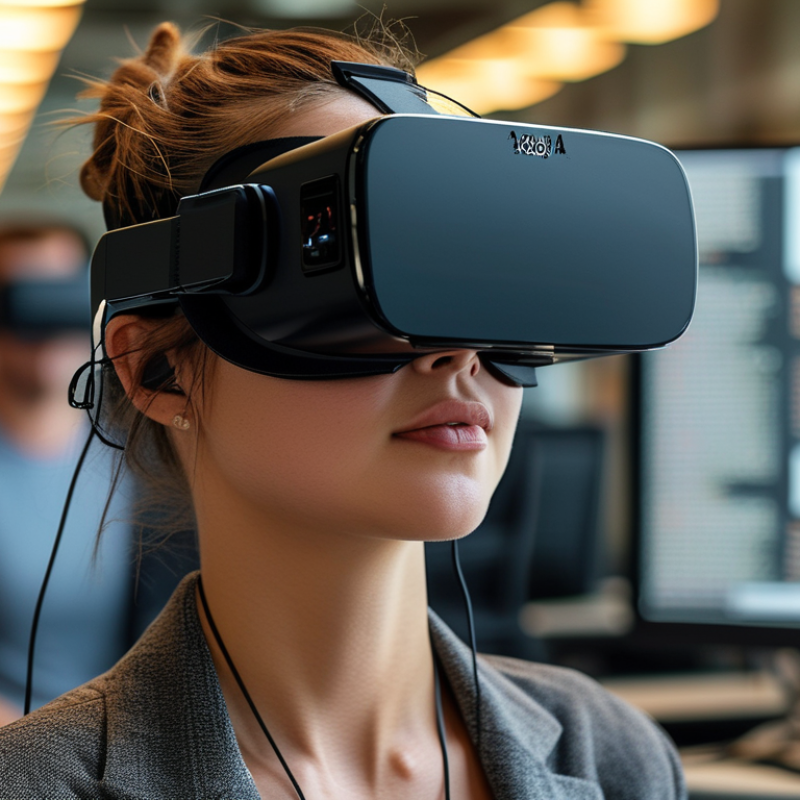
Overview of VR Training Platforms in Business Context
The landscape of business training is evolving rapidly, with virtual reality (VR) taking center stage. VR training platforms offer immersive experiences that engage employees in ways traditional methods often cannot. In various industries, from healthcare to manufacturing, the use of VR allows for realistic simulations, which can improve skill acquisition and retention. Employees can navigate complex scenarios safely, learning from their mistakes in virtual worlds without real-world consequences.
While the benefits of VR training are evident, several challenges remain. Not all companies can afford high-quality VR systems. Budget constraints may limit access to the best technologies. Additionally, employees may struggle with adapting to this new learning style. Some may feel overwhelmed by the technology, leading to frustration rather than engagement. Companies need to assess both their resources and the skills of their workforce before committing to a VR training platform. Creating a balanced approach that combines VR with other training methods may yield the best results in the long run.
Key Features to Look for in VR Training Platforms
When exploring VR training platforms for businesses, several key features stand out. Immersive environments enable effective learning by simulating real-world scenarios. A study by PwC indicates that VR training can lead to a 40% improvement in knowledge retention compared to traditional methods. Such immersive settings allow employees to practice without real-life consequences.
Another vital aspect is the customization capability of these platforms. Businesses benefit from tailoring content to meet specific training needs. According to a report by Training Industry, organizations that personalize their training see a 25% increase in employee engagement. This personalization also promotes continuous feedback, fostering an agile learning environment.
Ease of use remains crucial. An intuitive interface can significantly reduce the learning curve for users. Data shows that 60% of employees prefer platforms that require minimal training. This often means that while the technology can be advanced, it should not be overly complex. Balancing sophistication with usability is essential for successful implementation.
Top VR Training Platforms for Various Industries
Virtual reality (VR) training platforms are transforming various industries by offering immersive experiences. A report from the International Data Corporation (IDC) predicts that the VR training market will reach $6.3 billion by 2025. This technology enhances learning outcomes by making training more engaging and interactive.
In healthcare, VR simulations allow medical professionals to practice procedures in a risk-free environment. According to a study published in the Journal of Medical Internet Research, VR training improved surgical skills by 80% among residents. The construction sector is also benefiting. VR helps workers understand safety protocols better. A report from the Occupational Safety and Health Administration (OSHA) indicates that VR-based training can reduce workplace accidents by up to 40%.
Nonetheless, challenges exist in adopting VR training widely. Initial costs and the need for specialized equipment can deter companies. Some employees may also feel overwhelmed by new technology. Continuous feedback is crucial for refining training programs. Organizations must seek user input to create effective experiences. Despite these obstacles, the promise of VR in training is undeniable.
2026 Best VR Training Platforms for Businesses to Explore
| Platform Type |
Key Features |
Industries Served |
User Rating |
Cost Range |
| Simulation Training |
Realistic scenarios, interactive feedback |
Healthcare, Military |
4.8/5 |
$500 - $2000 |
| Soft Skills Training |
Role-play scenarios, behavior modeling |
Corporate, Education |
4.5/5 |
$300 - $1500 |
| Safety Training |
Hazard recognition, emergency procedures |
Construction, Manufacturing |
4.7/5 |
$400 - $1800 |
| Onboarding Training |
Company culture, job-specific skills |
Retail, Hospitality |
4.6/5 |
$200 - $1000 |
| Product Training |
Interactive product demos, features exploration |
Technology, Pharmaceuticals |
4.9/5 |
$600 - $2500 |
Comparative Analysis of Pricing Models for VR Training Solutions
In recent years, VR training solutions have gained traction in various industries. A significant factor driving this growth is the diverse pricing models available. According to a report from Research and Markets, companies are increasingly recognizing the return on investment from VR training, with projections estimating a 32% growth rate in the next five years.
Many platforms adopt subscription-based models. This allows businesses to scale usage based on their needs. These models typically involve a monthly or annual fee. For example, companies may pay per user or for access to a suite of training modules. Other platforms might use a pay-per-use model. This can be beneficial for companies with fluctuating training demands. However, organizations often find themselves grappling with unexpected costs, which can complicate budgeting efforts.
It's important to note that upfront investment can vary widely, from thousands to millions of dollars. Although some solutions promise quick results, the long-term value often lies in continuous updates and support. This can be a double-edged sword. Platforms need to deliver consistent quality and innovation to justify ongoing costs, but they may fall short if not continuously developed. Thus, finding a balance between initial costs and expected outcomes remains crucial for businesses exploring VR training platforms.
Future Trends in VR Training Technologies for Businesses
Virtual reality (VR) training is evolving rapidly. Businesses are increasingly investing in these technologies to enhance employee training programs. According to a report by PwC, VR training can improve knowledge retention by 75% compared to traditional methods. This significant boost in retention highlights the need for companies to embrace VR.
Future trends indicate a shift towards more personalized training experiences. AI integration is paving the way for adaptive learning paths. This allows employees to engage with content suited to their specific needs. Additionally, immersive environments are becoming more realistic. A study from Gartner predicts that by 2026, 60% of businesses will utilize VR for training and simulations. Companies must be aware of the potential challenges, such as high initial costs and the need for effective content creation.
Furthermore, the use of VR in soft skills training is gaining traction. Employees can practice communication and teamwork in simulated environments. This can lead to better interpersonal skills. However, the technology is not without its flaws. Some users experience discomfort or distractions in VR. Continuous refinement of these systems is essential for maximizing effectiveness. The evolution of VR training promises exciting prospects for enhancing workforce capabilities.
2026 Best VR Training Platforms for Businesses
The chart above illustrates the importance level of various dimensions of VR training platforms that businesses should consider in 2026. Immersive learning stands out as the most critical factor, followed closely by user engagement and skill retention, indicating a trend towards more interactive and effective training solutions.