Leave Your Message

Top 10 Benefits of VR Training in Healthcare for Professionals?

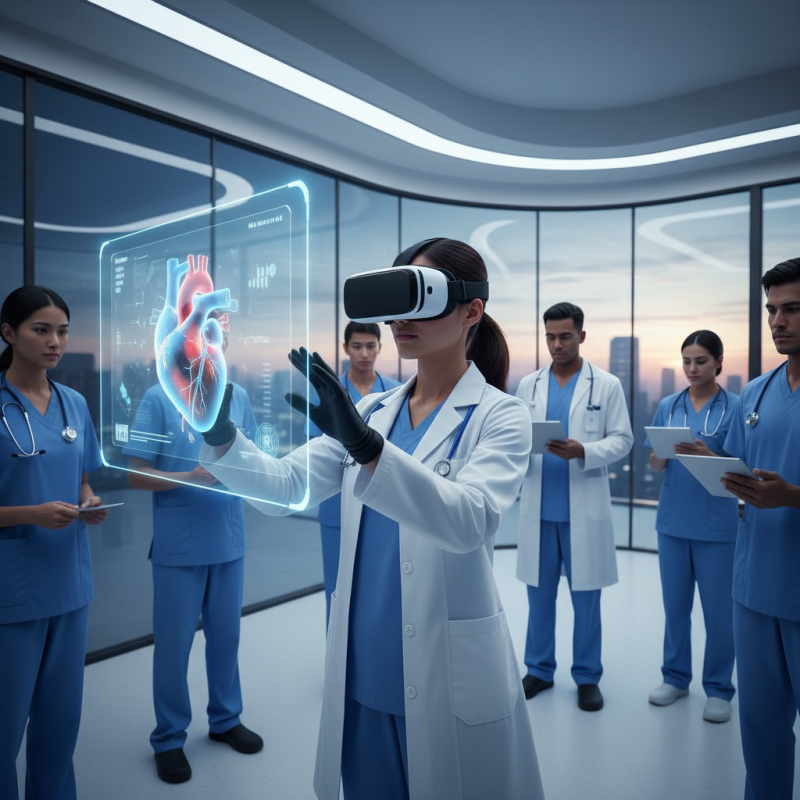
Virtual Reality (VR) training is transforming healthcare practices. Dr. Lisa Thompson, a renowned expert in VR training in healthcare, states, "Immersive simulations can bridge the gap between theory and real-world application." This shift towards VR training allows healthcare professionals to engage in realistic scenarios without the risks associated with patient care.

In clinical situations, traditional training methods fall short. VR training in healthcare immerses learners in lifelike environments. Practitioners can rehearse challenging procedures, enhancing their skills and confidence. With VR, they can experience high-stakes scenarios repeatedly without consequences.

Amid these advances, there are concerns. Not every professional finds VR intuitive. Adaptation may take time, and not all simulations cover every aspect of real-life situations. Yet, despite these challenges, the benefits of VR training in healthcare remain significant. It promises to improve patient outcomes while shaping the future of medical education.
Top 10 Benefits of VR Training in Healthcare for Professionals?

The Role of VR Training in Enhancing Medical Skills for Professionals

Top 10 Benefits of VR Training in Healthcare for Professionals?

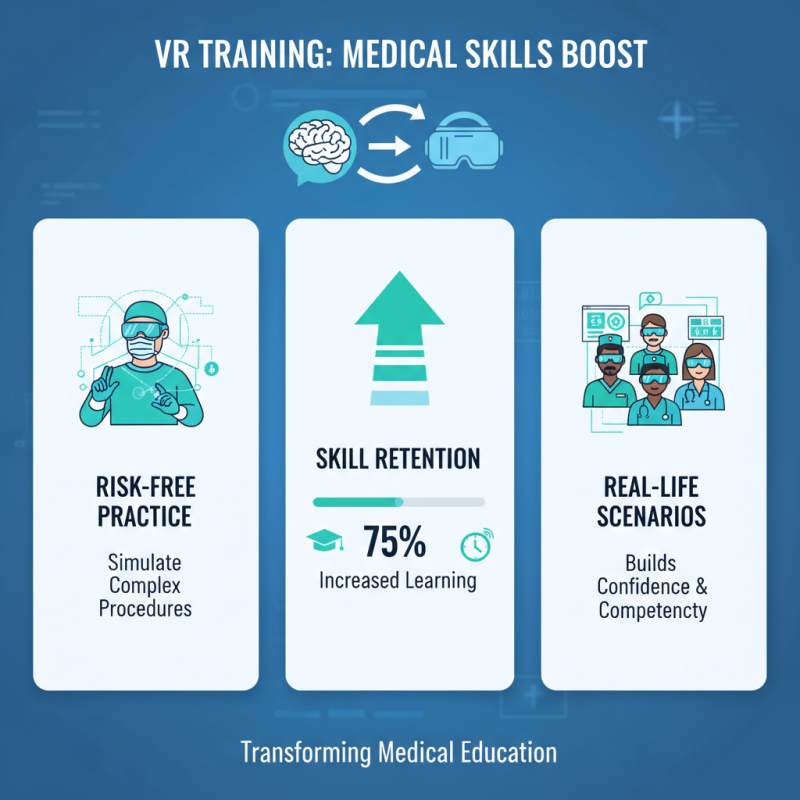
Virtual reality (VR) training is transforming medical education. Professionals can now practice complex procedures in a risk-free environment. Studies show that VR training can enhance retention of medical skills by up to 75%. This technology simulates real-life scenarios that doctors, nurses, and technicians face daily. Such immersion helps build confidence and skill competency.

A report from the Journal of Medical Internet Research indicates that 85% of healthcare professionals feel more prepared after VR training sessions. The interactive nature of VR offers immediate feedback, allowing learners to reflect on their performance. Some challenges remain, such as the need for advanced technology and the initial setup cost, which can be daunting for smaller facilities. Yet, the benefits are clear: improved hands-on experience leads to better patient outcomes.

Additionally, VR can cater to various learning styles. Some professionals may struggle with traditional training methods. VR's visual and kinesthetic learning aspects engage a wider range of learners. However, integrating VR training into existing curricula requires careful planning and commitment. It's not just about new technology; it's about reshaping how we approach medical education.
Improving Patient Outcomes through VR Simulation in Healthcare Training

Virtual reality (VR) training in healthcare is changing how professionals enhance patient care. Studies reveal that immersive simulations can improve clinical skills significantly. A report from the Journal of Medical Internet Research found that VR training increased procedural retention rates by up to 90%. This suggests that healthcare professionals using VR simulations are better equipped to handle real-life scenarios.

Patient safety is paramount. When staff train in a safe environment, it reduces the risk of mistakes in actual procedures. Research indicates that hospitals employing VR training noted a 30% drop in errors during surgeries. This indicates that VR not only prepares professionals but also boosts patient trust and satisfaction. However, there are concerns about access and individual differences in learning. Some professionals may struggle with the technology, pointing to the need for tailored approaches.

Investing in VR training comes with challenges. Implementation costs can be high, and not every institution has the resources. Moreover, the rapid evolution of technology can make current training programs quickly outdated. Continuous updates are essential, yet can be difficult to maintain. Despite these issues, the potential for improved patient outcomes makes VR an area worth exploring.

Top 10 Benefits of VR Training in Healthcare for Professionals

Cost-Effectiveness of VR Training Programs in Medical Education

Top 10 Benefits of VR Training in Healthcare for Professionals?

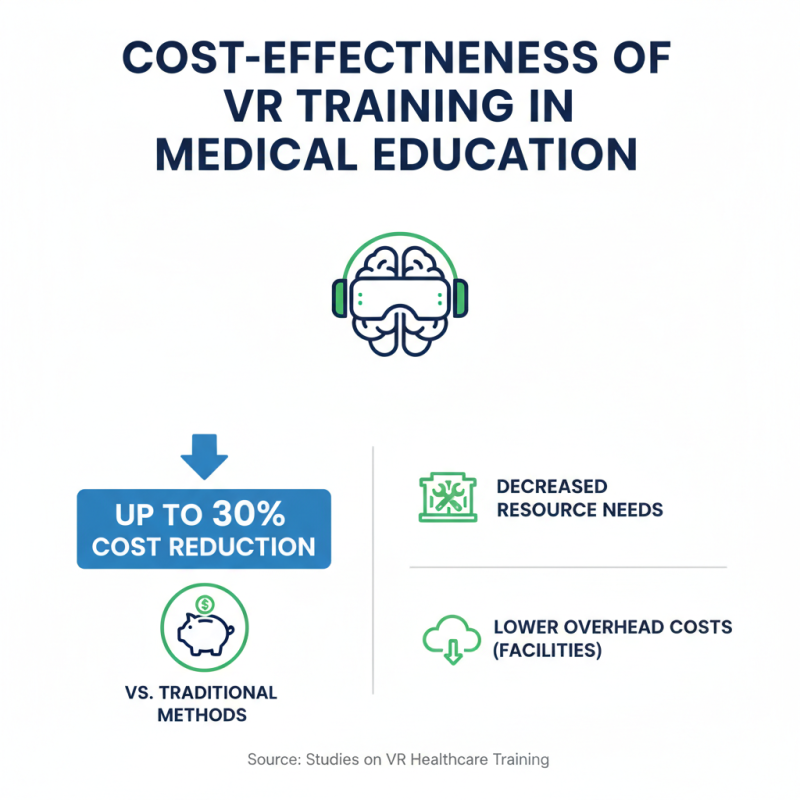
Virtual Reality (VR) training in healthcare offers compelling cost-effectiveness. Studies show that training simulations can reduce costs by up to 30% compared to traditional methods. This is primarily due to decreased resource needs and lower overhead costs related to physical training facilities.

Healthcare professionals face significant expenses for ongoing education. VR programs eliminate travel costs and allow for repeated practice without additional fees. A report from the American Medical Association highlights that institutions using VR saw a 50% increase in training efficiency. This translates into more trained professionals in less time and at lower costs.

However, challenges remain. Some institutions struggle to adopt VR due to initial setup costs. Resistance to change can hinder integration into medical curricula. Continuous feedback from participants is crucial. It helps refine the training experience, ensuring it meets evolving needs. Balancing these factors is essential for maximizing the benefits of VR in medical education.

Increasing Accessibility of Training with Virtual Reality Technologies

Virtual Reality (VR) technologies are revolutionizing healthcare training. They provide a unique platform for professionals to enhance their skills. According to a report by the Medical Education Journal, VR-based training increases knowledge retention by 75%. This is especially vital in high-stakes environments like surgery or emergency response.


Accessibility is a major advantage of VR training. Geographic barriers no longer impede professional growth. A study by the International Journal of Medical Education found that 40% of healthcare professionals in remote areas benefit significantly from VR programs. They gain experience through simulations that mimic real-life scenarios, making their training practical and effective.


Tip: Encourage healthcare facilities to adopt VR tools. Regularly update training programs to keep pace with advancements in medical technology.


Despite the benefits, some professionals feel hesitant. They question the effectiveness of virtual simulations compared to traditional methods. Address such concerns by showcasing data illustrating improved outcomes and competence.


Tip: Facilitate discussions among peers who have undergone VR training. This will foster a supportive learning environment. Engaging with experienced professionals can alleviate skepticism and encourage adoption.

Real-World Applications and Case Studies of VR in Healthcare Training

Virtual reality (VR) is transforming healthcare training, making it immersive and impactful. In surgical training, VR allows medical professionals to practice procedures safely. A study from the Journal of Surgical Education reveals that VR training improved accuracy by 30% compared to traditional methods. This data showcases the effectiveness of VR in building skills and confidence among surgeons.

Another compelling application is in patient interaction training. Healthcare professionals can practice difficult conversations in a controlled environment. According to a report by the Healthcare Information and Management Systems Society, 75% of users felt more prepared to handle real patient interactions after VR training. The use of realistic scenarios helps bridge the gap between theory and practice.

However, implementing VR has challenges. The technology requires substantial investment and ongoing maintenance. User feedback indicates a learning curve that can be intimidating for some. Furthermore, while VR has shown effectiveness, its long-term impact on patient outcomes needs further research. Balancing these factors is vital as the industry continues to evaluate VR's role in training healthcare professionals effectively.

Top 10 Benefits of VR Training in Healthcare for Professionals

Benefit Description Real-World Application Case Study Highlight
Enhanced engagement Immersive experiences increase learner interest and retention. Surgical simulations for medical students. In a simulation lab, students improved skill retention by 40%.
Safe practice environment Allows for practice on complex procedures without risk to patients. Emergency response training scenarios. Participants reported increased confidence in real-life emergencies.
Standardized training All trainees receive the same virtual experience, ensuring consistency. Training for nurses on patient care protocols. Data showed improved adherence to protocols in hospitals.
Immediate feedback Learners receive instant analysis of their performance. Skills assessment in clinical skills labs. Tools demonstrated a 30% improvement in skills over traditional methods.
Scalable training Easily replicable training modules for large groups. Group training for first responders across multiple locations. A state emergency response system trained thousands in a unified drill.
Flexibility Training can be accessed anytime, anywhere, on various devices. Self-paced learning modules for continuing education. Health professionals reported high satisfaction with the flexibility offered.
Cost-effective Reduces the need for expensive physical training tools and materials. Virtual anatomy labs instead of physical models. Institutions reported savings upwards of 50% on training costs.
Increased empathy Experiencing patient's perspective improves caregiver empathy. Training modules focusing on mental health scenarios. Participants reported improved interactions with patients following training.
Data tracking and analytics Performance data can help identify areas for improvement. Tracking outcomes in medical training programs. Institutions used data to refine training approaches with evidence-based improvements.