2026 Top Immersive Training Techniques and Benefits?
In recent years, the landscape of corporate training has been transformed by emerging technologies. Immersive Training has attracted significant attention, promising engaging and impactful learning experiences. A report by PwC revealed that learners in immersive experiences are 3.75 times more emotionally connected than traditional training methods, leading to better retention.
The trend shows increasing adoption across various industries. For instance, 67% of organizations implementing these techniques report improved employee performance. However, challenges remain. Not all teams have access to the necessary resources, and the technology can sometimes feel daunting. Organizations must evaluate their infrastructure before diving in.
Integrating Immersive Training requires careful consideration. A study by McKinsey found that businesses that invest in tailored training programs see a 28% increase in productivity. Yet, it is critical to balance investment with measurable outcomes. As companies explore these innovative techniques, they must remain mindful of potential pitfalls that may hinder progress.

Overview of Immersive Training Techniques in 2026
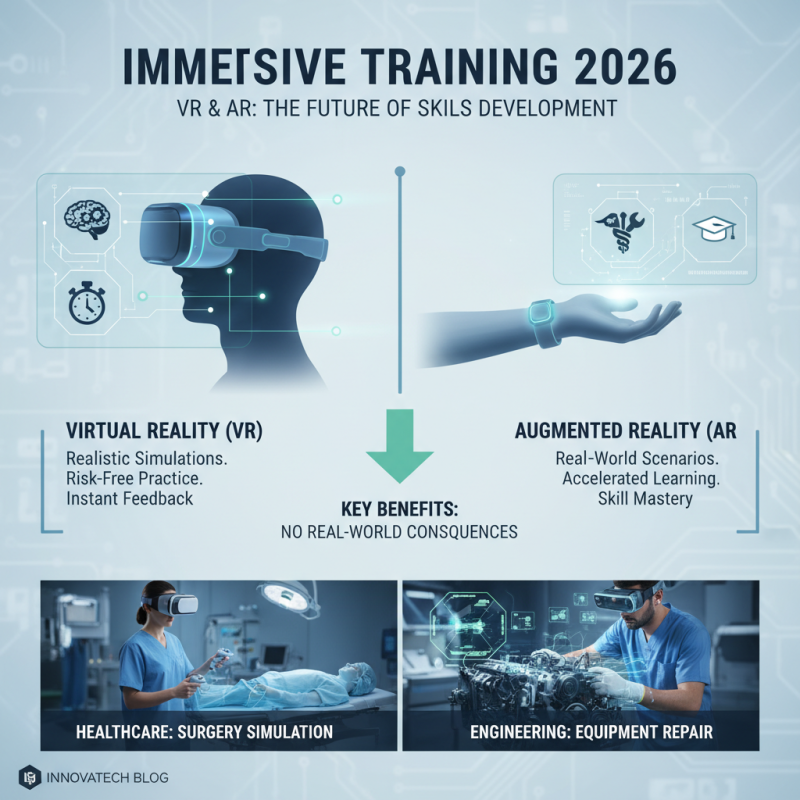
In 2026, immersive training techniques have evolved significantly. Virtual reality and augmented reality are at the forefront. These technologies offer realistic simulations of real-world scenarios. Trainees can practice skills without real-world consequences. For example, in healthcare, individuals can perform surgeries in a risk-free environment. They receive instant feedback, making learning more effective.
Gamification has also gained traction. By incorporating game elements, training becomes more engaging. Users participate in challenges, earning rewards along the way. This encourages motivation and commitment. However, the reliance on technology can lead to distractions. Sometimes, the immersive experience overshadows practical applications.
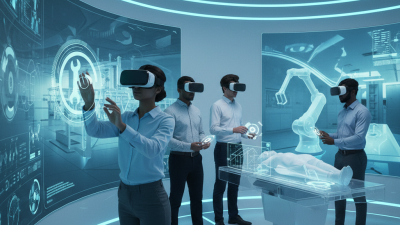
Another technique is mixed reality, blending physical and digital worlds. This allows for collaboration in ways traditional training cannot. Yet, accessibility remains an issue. Not everyone has access to necessary tools, limiting these techniques' reach. As immersive training continues to grow, it is crucial to address these gaps and improve.
Key Benefits of Immersive Training for Skill Development
Immersive training techniques have gained attention for their effectiveness in skill development. According to a report by PwC, organizations that use immersive training methods see a
45% higher retention rate compared to traditional training. This approach enables learners to engage in realistic scenarios. Such engagement leads to improved understanding and application of skills in real-time situations.
Moreover, immersive training fosters critical thinking. A study by the University of Washington highlights that trainees report
68% greater confidence in their skills after immersive experiences. This confidence translates to better performance on the job. However, not all immersive training techniques are equally effective. Some organizations struggle with designing programs that truly resonate with employees. The wrong approach can lead to
disengagement and wasted resources.
Hands-on practice is vital. Research shows that learners retain
75% of information when they practice. Yet, many companies hesitate to invest in immersive solutions. They fear the costs might outweigh the benefits. This concern can hinder potential growth in employee capabilities. Finding the right balance between
cost and quality is essential for maximizing the impact of immersive training.
Industry-Specific Applications of Immersive Training Technologies
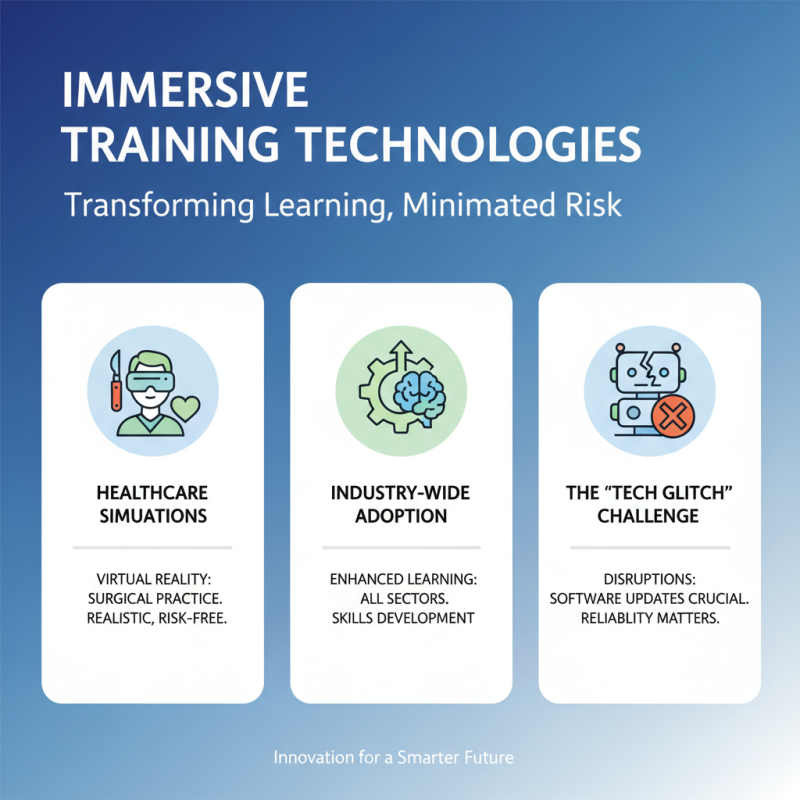
Immersive training technologies have gained traction in various industries, enhancing learning experiences. In healthcare, virtual reality simulations allow medical professionals to practice surgeries. This creates realistic environments without the risks. However, tech glitches occasionally disrupt training sessions, highlighting the need for constant updates.
In manufacturing, augmented reality provides guidance for assembly tasks. Workers can receive real-time instructions through AR glasses. While this boosts efficiency, it can sometimes overwhelm users. The information flow may be too fast, leading to mistakes. A balance between speed and comprehension is crucial.
The education sector leverages immersive techniques to engage students. Interactive environments spark creativity, but challenges remain in accessibility. Not all students benefit equally from these technologies. Ensuring equitable access is vital for true effectiveness. The potential is enormous, yet continual adaptation is necessary.
Statistical Impact of Immersive Training on Employee Performance
Immersive training techniques have gained traction in various industries. These methods create realistic scenarios, enhancing engagement and retention. The use of virtual reality and simulations allows employees to practice skills in a controlled environment. This hands-on experience can lead to better decision-making and confidence in real-world situations.
Statistical analysis shows significant impacts on employee performance. Companies implementing immersive training report up to a 30% increase in productivity. Engagement levels rise by nearly 40%, as employees find these methods more appealing. However, not all programs yield positive results. Some workers struggle with the technology or feel overwhelmed. This can detract from the intended benefits of immersive experiences.
Finding the right balance is crucial. Organizations must assess employee needs before implementation. A one-size-fits-all approach often fails. Continuous feedback helps refine training programs. By focusing on individual learning styles, companies can maximize the benefits. Immersive training can elevate performance, but only if it's tailored effectively.
2026 Top Immersive Training Techniques and Benefits
| Training Technique |
Description |
Benefits |
Statistical Impact on Performance (%) |
| Virtual Reality (VR) |
Immersive simulations for real-world scenarios. |
Enhanced engagement, better knowledge retention. |
85% |
| Augmented Reality (AR) |
Overlaying digital information on the real world. |
Improved accuracy in tasks, quicker training times. |
78% |
| Gamification |
Incorporating game elements to training modules. |
Increased motivation and satisfaction. |
73% |
| 360-Degree Feedback |
Collecting feedback from multiple sources. |
Holistic view of performance, areas for improvement. |
65% |
| Blended Learning |
Combination of online and in-person training. |
Flexibility, catering to different learning styles. |
80% |
Future Trends in Immersive Training: Adoption Rates and Innovations
As we move towards 2026, immersive training continues to reshape the educational landscape. A report from the XR Association indicates that 83% of organizations already implement some form of immersive technology in their training programs. Virtual Reality (VR) and Augmented Reality (AR) are at the forefront of this trend. These tools provide engaging and interactive environments for learners.
However, adoption rates are not uniform across industries. The healthcare sector leads, with 60% of institutions using VR for surgical training and patient simulations. Yet, many industries still lag behind, grappling with the high costs of immersive technologies and a lack of trained facilitators. A survey by the International Society for Technology in Education revealed that 40% of educators feel unprepared to use immersive tools effectively.
Despite these challenges, the benefits are clear. Immersive training offers 30% improved retention rates, according to research from the Learning Guild. This shows a promising future, yet organizations must address the skills gap and invest in professional development to fully unlock the potential of immersive training techniques.